Textron Aviation expands hangar to meet Cessna SkyCourier demand | Corporate Jet Investor | CJI news
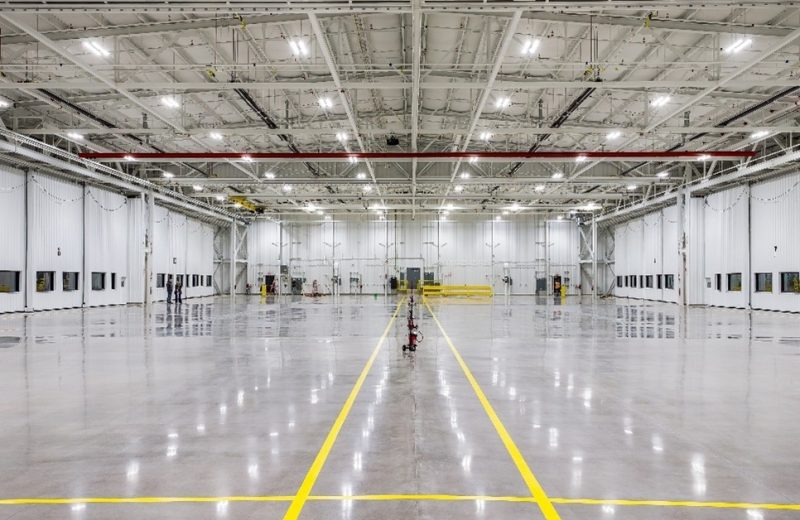
Textron Aviation has completed a 57,000-square-foot expansion of its flight test hangar at the East Wichita Campus, adding six new hangar bays in direct response to accelerating production and certification activity surrounding the Cessna SkyCourier twin-engine turboprop. The infrastructure investment reflects both the growing commercial order book for the SkyCourier and the parallel certification timeline of the Beechcraft Denali single-engine turboprop, with the expanded space enabling multiple flight test profiles to run simultaneously rather than sequentially. That parallel-testing capability carries practical significance: certification programs are notoriously bottlenecked by hangar throughput and ground support availability, and compressing test cycles directly affects entry-into-service schedules for airline and cargo customers who have aircraft on order.
For Part 135 operators and regional cargo carriers, the SkyCourier's trajectory represents a meaningful shift in the turboprop utility market. The aircraft's 6,000-pound payload and 900-nautical-mile range position it squarely in the thin-route cargo segment historically dominated by the Cessna Caravan, but its twin-engine configuration and 19-passenger commuter variant open regulatory and operational possibilities unavailable to single-engine alternatives. FedEx, which served as launch customer for the freighter variant, has deployed the type on feeder routes where reliability redundancy justifies the higher operating cost relative to single-engine platforms. The 19-seat ceiling is not incidental — it aligns precisely with the FAA's Part 135 commuter category threshold, allowing operators to remain below the more demanding Part 121 certification regime while maximizing passenger-carrying capacity.
The expansion into defense and special missions markets signals that Textron is deliberately broadening the SkyCourier's addressable customer base beyond commercial aviation. The aircraft's first military order and the certification of an in-flight operable door option indicate a design-flexibility strategy rather than a narrowly optimized commercial product. In-flight operable doors are operationally relevant for parachute operations, maritime surveillance, and light cargo airdrop missions — applications that government and defense contractors have historically sourced from aging platforms like the de Havilland Twin Otter or Casa CN-235. Competing for that segment requires exactly the kind of flight test infrastructure expansion Textron has now completed, since military and special missions variants often require extensive envelope expansion work beyond baseline commercial certification.
The concurrent support for Beechcraft Denali entry-into-service work within the same expanded facility underscores the broader pressure Textron faces in the turboprop certification pipeline. The Denali, powered by GE Aerospace's Catalyst engine, has faced a protracted development timeline and represents Textron's bid to displace the market-dominant Pratt & Whitney Canada PT6-powered Pilatus PC-12 in the single-engine turboprop segment. Corporate flight departments and owner-operators evaluating the Denali have been waiting years for a certified product, and any acceleration in ground support and test infrastructure that shortens that timeline carries direct commercial consequences. Textron's willingness to invest in physical plant expansion during a period of sustained turboprop demand — driven by fuel economics, short-runway performance, and operational flexibility relative to light jets — reflects an industry-wide recognition that the turboprop segment is experiencing durable, not cyclical, growth.