Airbus’ Next New Airplane Part 4. How does the ZEROe fit in?
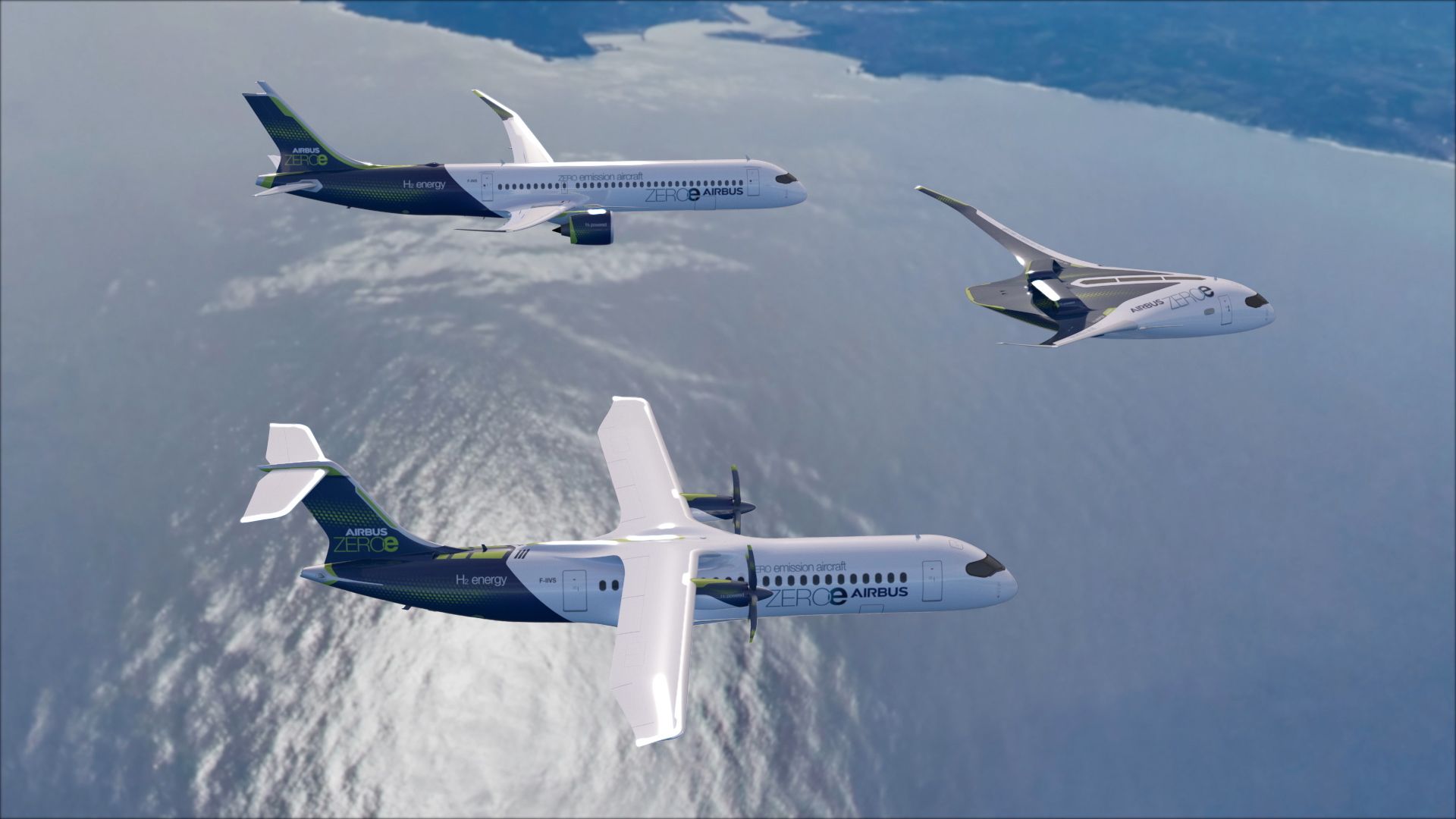
Airbus's ZEROe hydrogen aircraft program, conceived under political and financial pressure during the COVID-19 pandemic, appears increasingly unlikely to deliver on its original 2035 service-entry promise — and that trajectory carries meaningful implications for how operators and fleet planners should think about next-generation aircraft timelines. When France conditioned pandemic relief funding on Airbus committing to clean-fuel propulsion research in 2020, the manufacturer unveiled three hydrogen-powered concept aircraft ranging from a turboprop configuration to a blended wing body design. The gesture was partly genuine research ambition and partly politically necessary theater, and even insiders privately acknowledged the tension between those two motivations. By 2025, Airbus had quietly pulled back from hydrogen development in a meaningful way, confirming what several analysts and internal voices had suggested for years: that the technological, infrastructure, and certification obstacles to a hydrogen-powered commercial airliner by 2035 were insurmountable on that schedule.
The significance for professional pilots and aviation operators lies in what this pullback signals about the actual shape of the next aircraft generation. Airline flight departments, fractional operators, and large Part 91 and 135 operators making long-range fleet decisions in the 2026–2035 window cannot plan around hydrogen-powered narrowbodies or widebodies arriving within that timeframe. The practical infrastructure gaps alone — hydrogen storage, airport fueling systems, supply chain development, and regulatory frameworks for cryogenic fuel handling — represent a multi-decade buildout that no single OEM can accelerate unilaterally. Operators who may have hoped that Airbus's ZEROe commitment represented a credible near-term alternative to Jet A-powered aircraft should treat it instead as a longer-horizon research program with no guaranteed commercial endpoint.
The contrast with ATR's parallel commitment is instructive. ATR, 50% owned by Airbus, announced in February 2026 a hybrid-electric turboprop airliner targeting a 2029 entry into service. That more modest scope — shorter range, lower speed, smaller aircraft, hybrid rather than pure-hydrogen propulsion — reflects the realistic ceiling of what alternative-energy propulsion can achieve in the near term. Regional turboprop operations, including some commuter and feeder routes served by Part 135 operators, may eventually encounter this technology first. But the gap between a regional hybrid-electric turboprop and a hydrogen-powered narrowbody capable of replacing an A320 or 737 family aircraft is vast, and the ATR timeline should not be extrapolated upward as evidence that mainline hydrogen propulsion is similarly close.
The broader question the Leeham News series is examining — how ZEROe fits into Airbus's next new airplane strategy — points to a strategic inflection point the manufacturer must navigate carefully. With Boeing similarly distracted by certification backlogs, the 737 MAX's reputational overhang, and the slow progress of the 777X program, neither OEM has launched a clean-sheet commercial aircraft program since the A350 and 787 generation. The next narrowbody replacement cycle, likely centered on aircraft entering service in the late 2030s or 2040s, will almost certainly be powered by advanced turbofan engines burning sustainable aviation fuel rather than hydrogen. SAF compatibility, engine efficiency, and range-payload performance on conventional fuel will remain the operative variables for fleet planning decisions, not hydrogen readiness. Operators and lessors structuring long-term agreements today should calibrate their sustainability commitments accordingly, focusing on SAF blending capacity and fuel hedging rather than anticipating infrastructure for a hydrogen transition that recedes further with each Airbus program update.




 Read original article