Interiors & Connectivity | Aviation Week Network
Aircraft interiors and onboard connectivity are undergoing simultaneous transformation across every segment of aviation in mid-2026, with business aviation, regional carriers, and rotorcraft each absorbing meaningful upgrades that reflect broader industry pressure to modernize the cabin experience while managing operational complexity. Textron Aviation's decision to offer Gogo 5G connectivity as a retrofit option for Citation business jet operators represents one of the more consequential near-term developments for corporate flight departments, as it positions owners of an existing and widely-deployed fleet to close the gap with newer platforms without requiring aircraft replacement. Gogo's parallel announcement of a first multi-orbit satellite antenna installation in Brazil signals that the 5G terrestrial network is being complemented by a low-Earth orbit satellite overlay strategy, addressing coverage gaps that have historically plagued inflight connectivity in remote or oceanic regions. For Part 91 and Part 135 operators running Citation equipment, these upgrades translate directly into demonstrable improvements in passenger productivity and communications reliability — metrics that carry increasing weight in corporate flight department justification discussions.
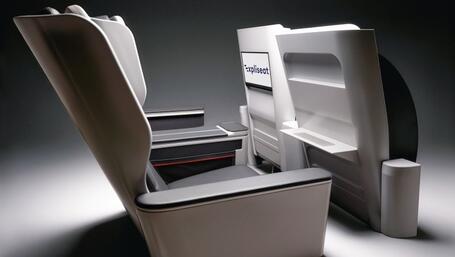
The Embraer Praetor 600E interior enhancements, including a redesigned seat architecture and 4K smart window technology, illustrate how ultra-midsize and super-midsize business jet manufacturers are competing on cabin environment quality as a primary differentiator. Smart window systems — which allow electronically controlled dimming and can theoretically integrate with cabin management systems — reduce reliance on traditional window shades, improve interior lighting control, and eliminate mechanical failure points that generate maintenance write-ups. For pilots operating these aircraft under Part 91K fractional or charter arrangements, these changes affect the pre-departure and in-flight passenger experience directly, which in high-end charter markets translates into repeat business and mission suitability assessments. The Expliseat TiSeat S development for Embraer and Mitsubishi CRJ regional jets addresses a different but related market need: as regional operators face pressure to improve per-seat economics and passenger comfort simultaneously, lightweight composite seating technology that extracts weight savings without sacrificing occupant experience provides operational value in terms of fuel burn and payload flexibility.
The rotorcraft sector is absorbing its own parallel wave of technology integration. Airbus and Lindo's study of antimicrobial blue light disinfection for emergency medical services helicopters addresses a persistent and underappreciated operational problem — pathogen transmission during airborne medical evacuations — that affects flight crews and medical personnel equally. If validated for airborne deployment, ABL technology would reduce the chemical cleaning burden between patient transports, improving aircraft availability and reducing crew exposure risk. Robinson Helicopter's fleet-wide adoption of Crewchief Systems digital aircraft management software represents a different category of cabin and aircraft system modernization: the digitization of maintenance tracking, airworthiness documentation, and systems monitoring for a high-volume general aviation and training fleet that historically has operated with paper-based or minimal digital workflows. For flight schools, tour operators, and utility operators running R22s and R44s, this integration reduces administrative friction and provides more reliable maintenance data continuity.
The general aviation Starlink pricing situation deserves particular attention from pilots operating outside the airline and business aviation ecosystems. SpaceX's revised pricing structure, announced in early March 2026, raised concerns that subscription costs for personal or light GA aircraft use would become untenable for many operators — a development that contrasts sharply with the simultaneous rollout of Starlink as a premium inflight service on United Airlines and British Airways. The bifurcation between enterprise-tier satellite broadband access and individual subscriber pricing reflects a structural tension in the low-Earth orbit connectivity market: as capacity is preferentially allocated to high-revenue airline contracts, the cost economics for individual pilots or small operators degrade. This matters operationally because cockpit connectivity has evolved from a convenience feature to a mission-critical tool for real-time weather data, EFB updates, ATIS streaming, and NOTAM synchronization on aircraft that lack integrated data link systems. Operators who rely on Starlink terminals for these functions will need to evaluate alternative providers or restructure connectivity budgets accordingly.
The aggregate picture across these developments reflects a sector-wide recognition that aircraft utility is increasingly inseparable from data connectivity and interior system quality. The global aircraft seat market's projected growth from $3.1 billion in 2025 to $5 billion by 2030 underscores the capital flowing into cabin modernization, while the simultaneous maturation of multi-orbit satellite constellations and ground-based 5G networks is creating competitive pressure that is compressing upgrade cycles. For airline, corporate, and charter operators, the practical implication is that cabin and connectivity investments formerly treated as discretionary are becoming baseline expectations — among passengers, clients, and in some cases, crewing and operational standards. Flight departments and aviation operators that defer these upgrades risk competitive disadvantage not just in passenger experience, but in the operational data infrastructure that increasingly underpins safe and efficient mission execution.






 Read original article