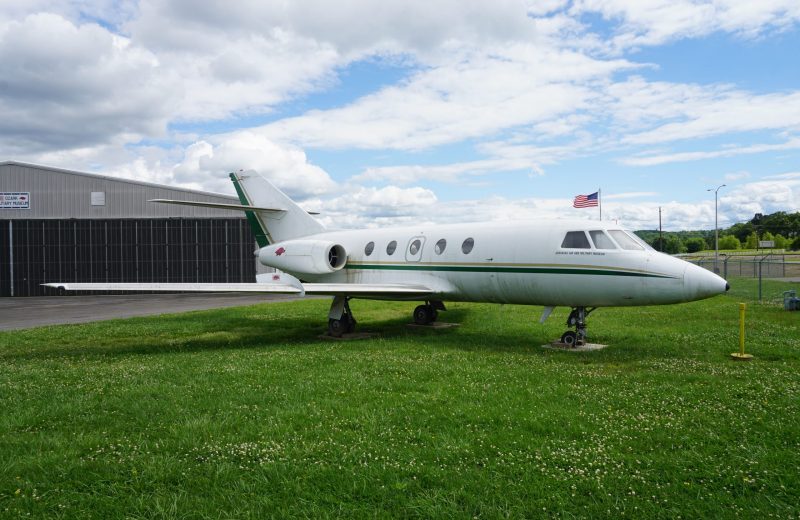
FAA issues new safety directive for Dassault Falcon 20 jets | Corporate Jet Investor | CJI news
The FAA has issued an updated Airworthiness Directive targeting 61 U.S.-registered Dassault Falcon 20 aircraft — specifically the C5, D5, E5, and F5 variants — with an effective date of May 29, 2026. The directive mandates that operators revise their maintenance and inspection programs within 90 days to address fatigue cracking, corrosion, and structural damage risks that could compromise airframe integrity. The action supersedes a previous 2026 order and was prompted by updated airworthiness limits established by EASA, reflecting the agency's ongoing reassessment of aging aircraft structures in European and transatlantic fleets.
The compliance burden, while modest in isolation, carries real operational implications for the small community of operators still flying the Falcon 20. The FAA estimates approximately 90 labor-hours per operator at $85 per hour, totaling roughly $7,650 per aircraft — a figure that underestimates total cost for operators who must also coordinate maintenance scheduling, potentially ground aircraft, and update their FAA-accepted inspection programs through their Principal Maintenance Inspectors. For Part 135 charter operators or cargo carriers running the Falcon 20 on tight margins, even routine AD compliance requires careful coordination between flight operations and maintenance planning to avoid revenue disruptions during the 90-day compliance window.
The Falcon 20's operational history spans more than six decades, and the aircraft has found persistent utility in niche roles including cargo operations, pilot training, and on-demand charter. Several fractional and charter operators have historically used the type as a cost-effective light jet option, and the airframe remains active in fleet inventories where acquisition economics outweigh the carrying costs of newer platforms. The structural concerns identified in this directive — fatigue cracking and corrosion — are characteristic of aging aluminum airframes that have accumulated significant cycles and calendar time, and are precisely the failure modes that EASA's enhanced airworthiness limitation frameworks are designed to catch before they become in-service events.
The absence of any operator comments during the public comment period is a notable procedural detail. It may reflect the relatively small and specialized operator base for the Falcon 20 in the U.S., limited industry engagement with legacy-type ADs, or tacit acceptance that the compliance costs and requirements are reasonable given the aircraft's age and known structural risk profile. Historically, ADs on aging business and utility jets generate operator feedback when compliance costs are disproportionate or when technical requirements are ambiguous — silence in this case suggests the directive's scope and cost estimates were not considered burdensome enough to contest.
Broadly, this directive is part of a continuing regulatory pattern in which EASA updates airworthiness limitations for older European-designed business jets and the FAA subsequently adopts corresponding mandates through its bilateral aviation safety agreement processes. Operators of aging fleets — whether Falcon 20s, older Citations, or legacy Learjet variants — should treat this as a reminder that the regulatory envelope around aging airframes continues to tighten as these aircraft accumulate structural age beyond original design assumptions. For flight departments and Part 135 operators evaluating fleet retention decisions, the compounding cost of successive ADs and revised maintenance programs on legacy types is an increasingly relevant factor in the total cost of ownership calculus.