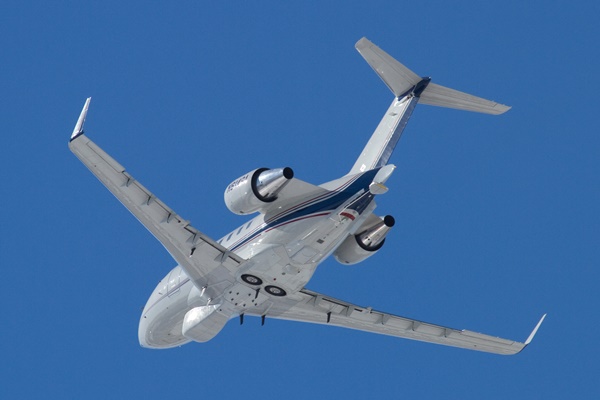
FAA proposes safety rule after Bombardier Challenger flaps malfunction | Corporate Jet Investor | CJI news
The FAA has issued a proposed airworthiness directive targeting 610 U.S.-registered Bombardier Challenger 600, 601, and 604 series aircraft following a documented in-flight flaps malfunction in which the flap surfaces moved uncommanded from the 0-degree retracted position to a full 45-degree deflection — well beyond the 3-degree intermediate stop position — while a FLAPS FAIL caution illuminated on the flight deck. Root cause analysis identified a failed retract relay as the mechanism that allowed the uncommanded movement to continue unchecked. The aircraft returned to its departure airport without further incident, but the event exposed a gap in existing crew procedure guidance for managing this specific failure mode. The proposed rule would require operators to revise their Aircraft Flight Manuals with updated abnormal procedures addressing uncommanded flap movement scenarios.
The practical implications for crews operating Challenger 600-series aircraft are significant. Uncommanded flap extension at cruise or climb speeds can rapidly exceed aircraft structural limits, create asymmetric lift conditions, and induce loss-of-control scenarios with minimal warning time. The fact that the flaps moved to 45 degrees — a full-flap position — rather than arresting at the 3-degree stop underscores how a single relay failure can cascade into a high-energy aerodynamic event. Updated AFM procedures will give crews a defined, tested response pathway rather than requiring in-the-moment improvisation under pressure. The compliance burden is estimated at one work-hour per aircraft, making this a low-cost, high-value update for operators across the Challenger fleet.
This proposed AD does not arrive in isolation. It follows a 2023 directive that introduced operational testing of the flap control system as an interim measure, indicating that the FAA and Transport Canada have been actively monitoring this failure mode for several years. The current proposal effectively formalizes and extends that earlier response by embedding new procedures into the AFM rather than relying solely on preflight system checks. The mirroring of Transport Canada guidance — Canada being the state of design for Bombardier products — reflects standard bilateral coordination between the two authorities and suggests the procedural fix has already been validated within the certification framework.
For Part 91, 91K, and 135 operators managing Challenger 600-series aircraft, the comment period running through July 10, 2026, under Docket No. FAA-2026-4642 represents an opportunity to engage the rulemaking process before the directive is finalized. Flight departments and fractional providers should begin coordinating now with their Director of Operations and chief pilots to assess AFM revision workflows, ensure simulator training profiles are updated to include this failure scenario, and verify that contract maintenance providers are prepared to execute the manual update upon AD issuance. Given the low compliance cost and the operational risk associated with the underlying failure mode, early voluntary adoption of the procedural guidance — ahead of final rulemaking — would reflect sound safety management practice.