GE’s MRO expansion, supply chain improvements to reduce engine turnaround time
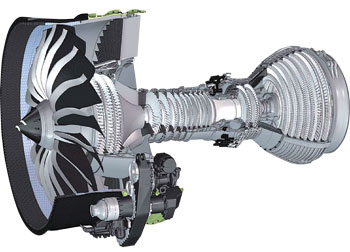
GE Aerospace's Commercial and Engine Services division is executing a multifaceted strategy to prevent a capacity crisis in the engine MRO sector, with particular focus on its CFM LEAP and GEnx product lines. Mohamed Ali, president of the division, acknowledged at a May 19 media briefing that durability shortfalls across multiple engine programs — not just GE's — have compressed on-wing times and accelerated the pace of shop visits industrywide. His unit's response centers on a billion-dollar facility expansion, new authorized third-party repair centers, and a data-driven predictive maintenance framework intended to give the supply chain years of advance notice on material demand. LEAP engines shipping today are reportedly approaching the durability benchmarks set by the legacy CFM56, while GEnx durability is trending toward parity with the CF6 and GE90 — a meaningful benchmark given those engines' reputation for long on-wing intervals.
The concern driving much of this investment is what industry participants call a "bow wave" — a surge in simultaneous shop visits triggered by the simultaneous aging of a large installed base of engines that entered service with shorter-than-expected on-wing times. Ali drew a direct historical parallel to the GE90 program, noting that similar fears proved manageable when GE addressed the problem systematically rather than reactively. The analogy is instructive but imperfect: the LEAP fleet is considerably larger and more geographically distributed than the GE90 ever was, and the parallel distress at Pratt & Whitney's GTF program and Rolls-Royce's Trent family means MRO capacity globally is already strained. Any spillover from LEAP demand into widebody engine MRO — where slots are shared and technician pools overlap — carries real schedule risk for operators with mixed fleets.
For airline and charter operators, the operational implications are direct. Aircraft on ground (AOG) events tied to engine shop visit backlogs have already cascaded into fleet utilization penalties, wet lease dependency, and aircraft delivery schedule disruptions across the narrowbody segment. GE's reported 25–50% reduction in turnaround times at various facilities, combined with a 40% year-over-year increase in parts throughput and a 25% rise in LEAP engine output during 2025, represents tangible progress — though the gap between current capacity and projected demand remains the critical unknown. Operators with Power-by-the-Hour or similar contractual arrangements with GE may see some protection, but those relying on spot MRO capacity or independent shops authorized through GE's network should monitor queue lengths and negotiate shop visit scheduling well ahead of anticipated removal dates.
The broader trend this story reflects is the industry's reckoning with the gap between next-generation engine promise and real-world durability performance. Both the LEAP and GTF were marketed on dramatically lower fuel burn and emissions, but the metallurgical and thermal management challenges inherent in higher-efficiency engine architectures have proven more persistent than manufacturers initially projected. The result is a structural MRO demand pull that will define capacity planning conversations for the remainder of the decade. For Part 91K and Part 135 operators flying business jets powered by CFM or GE derivatives, the supply chain tightening has secondary effects on parts pricing and lead times that filter through the entire aviation aftermarket. GE's investment in predictive analytics and supply chain coordination, if executed at scale, may represent the most durable fix — one that shifts the MRO model from reactive to anticipatory in ways that benefit all tiers of the operator community.




 Read original article