6.5 Hours On Southwest Airlines? Its Longest-Ever Lower 48 Flight Launches This Week
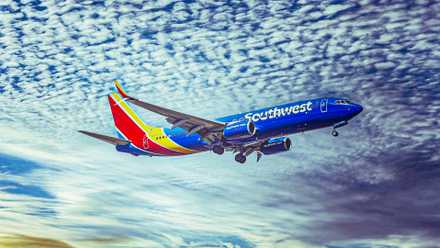
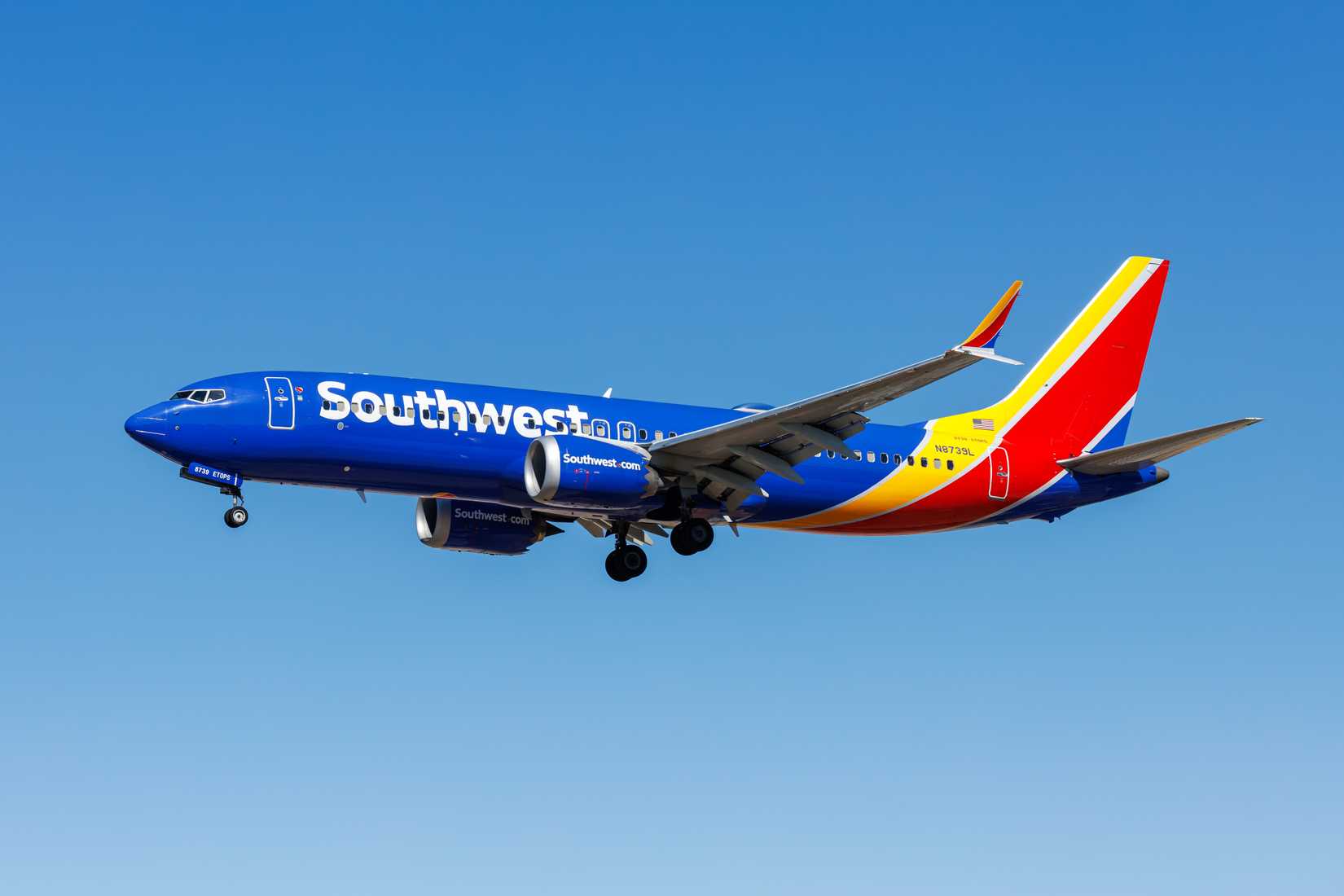
Southwest Airlines' new Boston Logan (BOS) to San Diego (SAN) nonstop service, launching June 4, 2026, establishes the carrier's longest scheduled block time for any flight within the contiguous 48 states at six hours and 25 minutes westbound. The route displaces the Baltimore-Washington (BWI) to San Francisco (SFO) corridor, which carries a maximum block of six hours and 15 minutes, from the top of Southwest's domestic duration rankings. With 211 rotations scheduled across the remainder of 2026, the operation leans heavily on the Boeing 737 MAX 8, which will handle 152 of those flights, with the 737-800 covering 51 and the aging 737-700 accounting for just eight. The eastbound leg returns overnight, a scheduling pattern common on long transcontinental pairings that allows operators to maximize aircraft utilization across time zones while positioning equipment for morning bank departures.
For professional flight crews and airline operators, the block time figure carries significant operational weight. A westbound block of six hours and 25 minutes pushes against crew rest and duty-time planning thresholds under FAR Part 117, particularly for augmented versus non-augmented operations. The fleet assignment strategy is instructive: Southwest's preference for the MAX 8 on this pairing reflects the variant's improved fuel efficiency and extended range capability relative to the 737-800 and -700, making it the economically rational choice for the carrier's longest domestic segments. The continued appearance of -800 and -700 metal on a route of this length signals scheduling and fleet availability constraints rather than a purely performance-based decision, a reality familiar to any chief pilot or director of operations managing a mixed-generation narrowbody fleet.
The competitive landscape on BOS-SAN underscores how vigorously the major carriers have pursued transcontinental narrowbody operations. Southwest enters a market where JetBlue already dominates with 934 flights and 150,044 seats, all operated on the Airbus A321, while Alaska Airlines contributes 557 flights predominantly using the 737-900ER, and Delta accounts for 365 rotations flown almost entirely on the A321neo. Southwest's 211 flights represent just 10.2 percent of total westbound departures, positioning it as a disciplined niche entrant rather than a direct frequency competitor. The A321 and A321neo's prevalence among rivals is notable — both variants offer greater seat capacity and comparable range, giving JetBlue and Delta a unit cost advantage per seat-mile on a route where load factor management at the margin matters considerably.
The broader significance of this development extends beyond Southwest's internal route hierarchy. It reflects an industry-wide acceleration of long-haul narrowbody flying as carriers extract maximum productivity from new-generation single-aisle aircraft. The MAX 8, A321neo, and 737-900ER have collectively enabled carriers to profitably serve city pairs that once required widebody equipment or connecting itineraries, compressing the competitive differentiation that legacy carriers previously enjoyed through hub connectivity. For business aviation operators and corporate flight departments evaluating transcontinental positioning, the addition of a daily nonstop on BOS-SAN reinforces the trend toward more direct commercial options on secondary transcontinental markets, which historically has applied competitive pressure on charter demand for routes of comparable stage length. Pilots operating long-range business jets in Part 91 or 135 environments on similar corridors should note that direct scheduled competition on these routes continues to expand, shaping both passenger expectations and market pricing dynamics.





 Read original article