Why The Airbus A350-1000 Has Such A Long Range
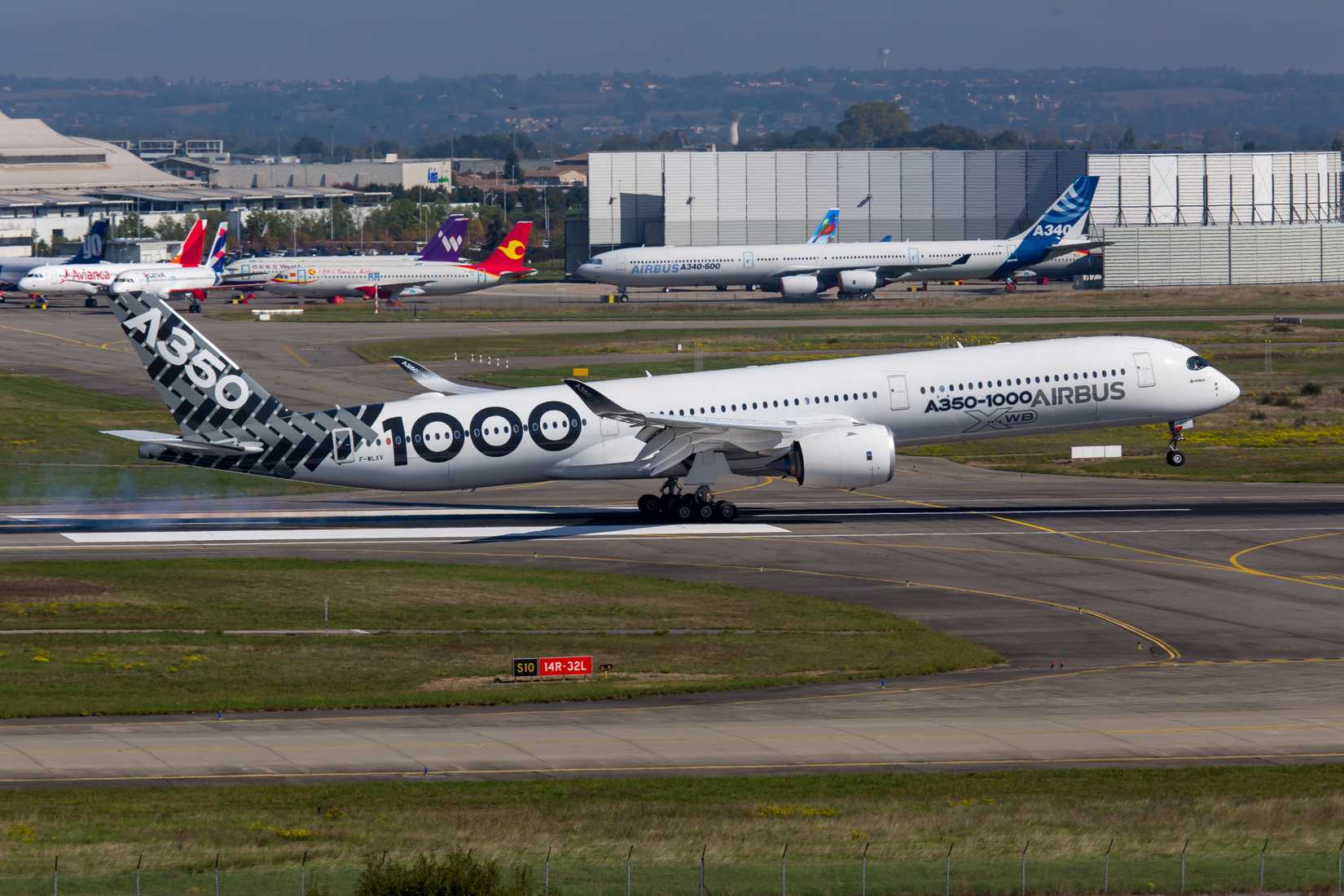
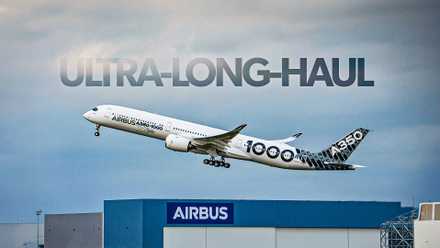
The Airbus A350-1000 stands as one of the most capable long-range widebody aircraft in commercial service, certified in late 2017 and entering revenue operations with Qatar Airways in early 2018. Powered by the Rolls-Royce Trent XWB-97 — an engine developed specifically for the type — the aircraft achieves an operational range of 9,000 nautical miles (16,700 km) at a maximum takeoff weight of 322 metric tons, accommodating between 375 and 400 passengers in a standard three-class configuration. Airbus has delivered 113 examples of the type as of April 2026, with a remaining order backlog of 254 aircraft, underscoring sustained airline demand despite the -1000 holding fewer total customers than its smaller sibling, the A350-900. The range advantage over the -900 — approximately 500 additional nautical miles — derives from the more powerful engine variant combined with aerodynamic refinements and fuel systems optimization rather than a simple scaling of the airframe.
The distinction between the A350-900 and A350-1000 is commercially significant and operationally instructive. The -900, with its 8,500 nm range and lower seat count of 332 to 352 in three-class, is easier for most carriers to fill on thinner long-haul routes, which explains its broader customer base. The -1000 targets operators running high-density, ultra-long-haul trunk routes where both payload and range are simultaneously constrained. Airlines such as Qatar Airways and Cathay Pacific operate both variants, using each where its economics and mission profile align. For operators and flight planners, the practical takeaway is that the 500 nm range delta between variants is not merely a marketing figure — it is the difference between a fuel stop and a nonstop on certain city pairs, particularly in the Pacific and between Asia and the Americas.
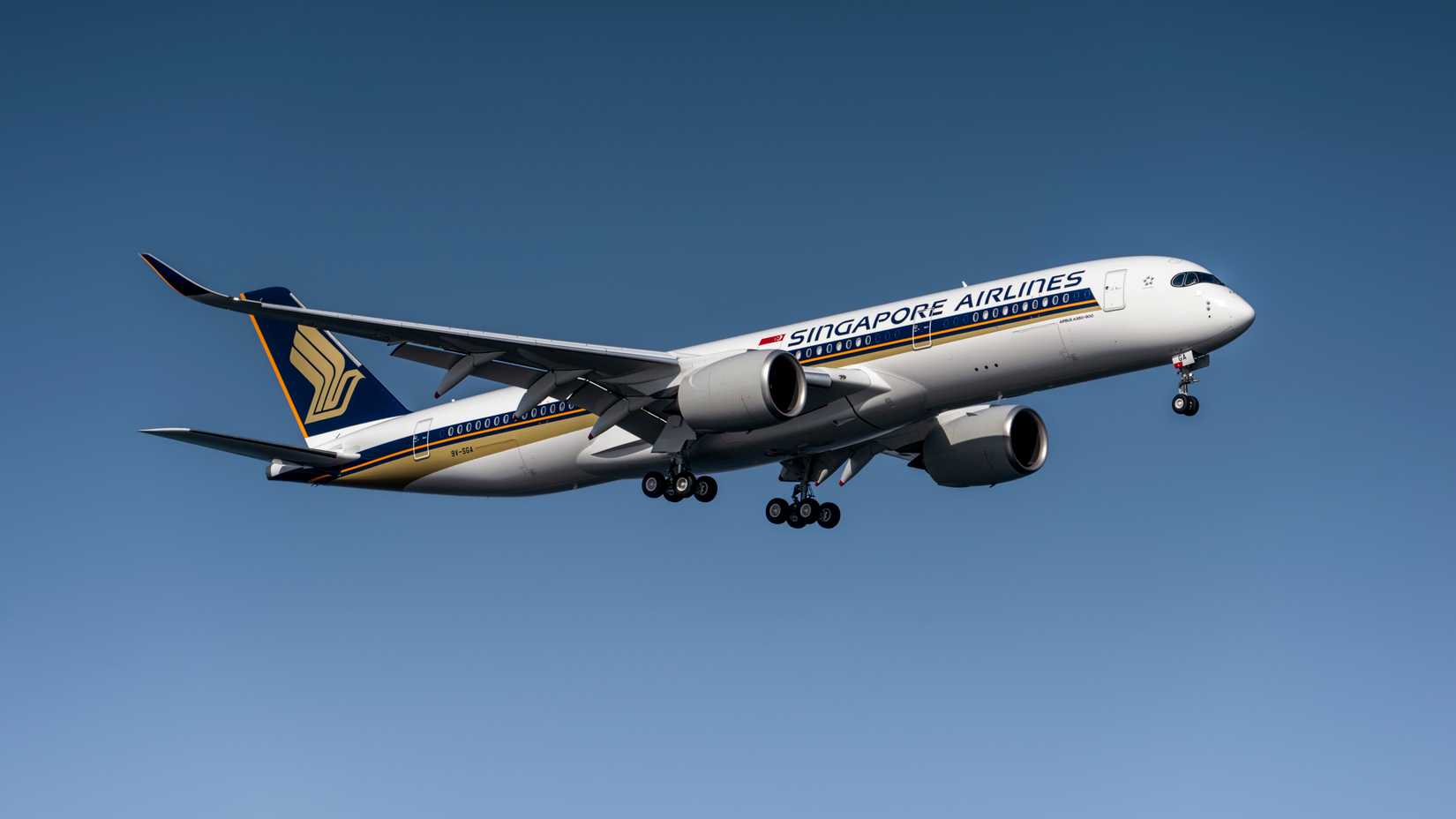
The Ultra-Long Range derivatives of both A350 variants represent the outer boundary of current commercial aviation capability. Singapore Airlines operates seven A350-900ULR aircraft configured for ranges up to 9,700 nm (18,000 km), enabling its Singapore–Newark and Singapore–JFK nonstop services — currently the world's longest scheduled flights, with westbound sectors averaging 17.5 hours and eastbound returns frequently exceeding 18.5 hours. These flights demand rigorous crew rest planning, augmented crew configurations, and precise fuel management across oceanic tracks, presenting operational challenges that distinguish ULR operations from conventional long-haul flying. The physiological and regulatory demands on flight crews operating segments of this duration place ULR service in a category unto itself within Part 121 equivalent operations globally.
The forthcoming A350-1000ULR for Qantas, developed under the carrier's Project Sunrise initiative, extends the concept further. Qantas finalized an order for 12 aircraft in 2022, and the first assembled example is expected to be delivered later in 2026. The variant is designed to sustain 22 hours of nonstop flight, enabling direct services from Sydney and other eastern Australian cities to London and New York — routes currently requiring a technical stop in Singapore, a routing further complicated by the ongoing Middle East conflict that has disrupted Qantas's Perth–Heathrow nonstop operations. While Airbus has not published a specific nautical mile figure for the -1000ULR's range, the 22-hour design threshold implies a meaningful extension beyond the standard 9,000 nm envelope and will require novel approaches to crew scheduling, passenger wellness protocols, and in-flight medical preparedness.
For aviation professionals, the A350 family's continued evolution into ULR territory reflects a broader industry trend toward eliminating intermediate stops on antipodal routes, driven by both passenger preference and the economics of avoiding congested hub connections. The aircraft's composite-heavy construction, which keeps structural weight low relative to fuel and payload capacity, is the foundational enabler of these range figures — a design philosophy shared with Boeing's 787 family but executed at a larger scale. As more carriers evaluate ultra-long-haul service expansion, the operational infrastructure surrounding these flights — including crew qualification standards, alternate airport planning across remote oceanic tracks, and extended diversion fuel requirements — will increasingly occupy flight operations and safety departments at airlines adding A350ULR variants to their fleets.








 Read original article