News | FLYING Magazine
FLYING Magazine's current news cycle reflects an aviation industry simultaneously managing infrastructure strain, regulatory evolution, and a rapidly shifting operational environment across commercial, business, and general aviation segments. Several of the most consequential headlines center on physical capacity and airspace security: Tampa Executive Airport's $6.4 million hangar expansion — adding four new structures and 42,000 square feet of storage — signals continued pressure on business aviation infrastructure in high-demand Sun Belt markets, where ramp and hangar availability has tightened significantly since 2020. Simultaneously, the FAA's formal response to drone threats at critical infrastructure sites, paired with Pentagon testing of anti-drone laser systems at five locations, underscores that low-altitude airspace management has moved from theoretical concern to active federal priority. For operators flying in and out of facilities near power grids, water treatment plants, and government installations, this regulatory attention will likely translate into new NOTAMs, temporary flight restrictions, and coordination requirements in the near term.
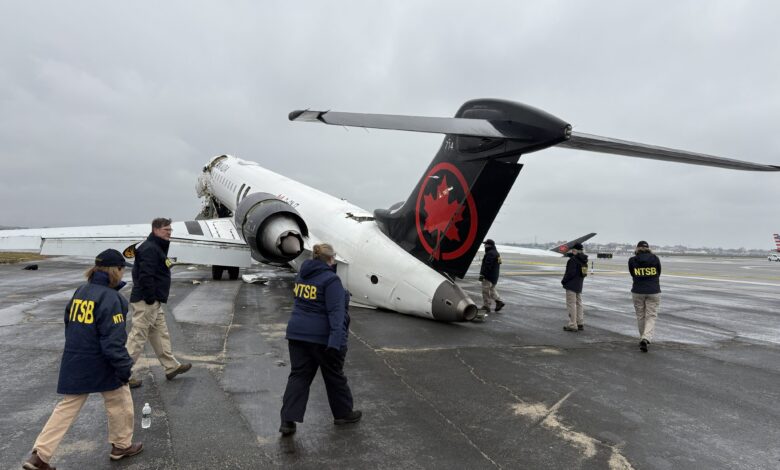
The accident and legal news carries significant weight for operators across Part 91, 135, and airline environments. New lawsuits targeting UPS, Boeing, and the estate of the late pilot involved in the Louisville fatal crash represent the continued legal reckoning following major cargo accidents, with liability theories now extending to aircraft manufacturers and institutional employers rather than remaining narrowly focused on individual crew decisions. The NTSB's findings on the LaGuardia airport vehicle incursion — specifically that a ground vehicle missed active warnings before a fatal collision — reinforces an ongoing pattern the agency has highlighted in runway safety: ground crew situational awareness and vehicle communication protocols remain a significant vulnerability at towered airports. The Hop-A-Jet president's public reflection on the charter operator's 2024 crash following NTSB findings is notable as well, as post-accident transparency from Part 135 operators remains relatively rare and may signal industry pressure for greater accountability from charter companies following high-profile incidents.
The policy and regulatory headlines carry direct operational implications for the business aviation community. Florida's legislative ban on ADS-B fee calculations at airports represents a state-level pushback against airport revenue mechanisms tied to avionics data — a development that, if replicated in other states, could complicate how airports structure fees for GA and business jet operators. The proposed legislation that would allow F-14s to return to flight, while primarily of historical and military interest, touches on a broader conversation about vintage military aircraft airworthiness frameworks and the legal structures governing their civilian operation. Meanwhile, the spotlight on Whiteman Airport by Los Angeles County authorities continues a pattern of municipal scrutiny of GA airports in high-value urban real estate corridors, a trend that has already resulted in airport closures or capacity reductions across Southern California and other metropolitan regions.
Workforce and career pipeline content in the current issue reflects structural challenges that continue to shape pilot labor markets. Former Spirit Airlines pilots awaiting paychecks amid the carrier's bankruptcy proceedings represent a cautionary data point for pilots evaluating LCC employment stability as a career path, particularly as several ultra-low-cost carriers have faced financial distress in the post-pandemic environment. The Washington State high school aeronautical program expansion and the military-to-commercial transition feature collectively point to an industry actively working to rebuild its pipeline at multiple entry points — from student discovery through professional transition — as regional carriers and Part 135 operators continue to report difficulty attracting qualified applicants at competitive pay scales. The buyers' guide framing turbine transition strategy for 2026 as a formal "operator roadmap" reflects the practical reality that many high-utilization piston aircraft owners are now confronting economics that favor moving up the performance ladder, driven by maintenance costs, insurance requirements, and mission complexity that single-engine piston platforms are increasingly unable to meet efficiently.



















 Read original article