Why In The World Did American Airlines Fly Between Seattle & London?
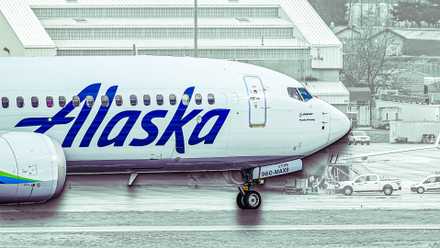
American Airlines' brief foray into Seattle-Tacoma International Airport (SEA) as a transatlantic departure point represents one of the more instructive case studies in alliance-driven route strategy of the early 2020s. Launched in March 2021 during the depths of the COVID-19 travel collapse, the carrier's SEA–London Heathrow (LHR) service was never conceived as a standalone commercial play. It was, at its core, a structural response to Alaska Airlines joining the oneworld alliance, a development that transformed American's competitive calculus on the West Coast overnight. Because Alaska lacked the widebody fleet and operating certificates to serve Europe independently, American effectively assumed the role of international extension of Alaska's Pacific Northwest domestic network, positioning Seattle as a feed-point into its global route map rather than a true originating hub.
The competitive logic behind the move becomes clearer when viewed against Delta Air Lines' decade-long investment in Seattle. Delta had been methodically cultivating SEA as a transpacific gateway since the early 2010s, operating its own SEA–LHR service and building substantial brand equity among the region's corporate travel community. American's entry with a competing London flight was a direct counter to that positioning — an attempt to capture premium and corporate traffic from anchor employers like Amazon, Microsoft, and Boeing, all of which generate disproportionately high volumes of transatlantic business travel. For pilots and crew planning departments, this dynamic illustrates how hub competition shapes route decisions as much as raw demand data does; American was buying relevance in a market, not necessarily chasing yield-per-seat-mile.
The operational reality, however, proved unforgiving. Launching a new long-haul transatlantic route during a period of near-zero international demand required a level of load-factor tolerance that few carriers could sustain outside a partnership-subsidized framework. American's simultaneous planning for SEA–Bangalore and SEA–Shanghai routes — both of which collapsed under the weight of border closures and, later, Russian airspace restrictions — underscores how heavily the broader Seattle international strategy depended on assumptions that the post-pandemic operating environment would quickly normalize. The Russian overflight closure in particular became a structural barrier for SEA–Bangalore that no amount of demand recovery could overcome, as it fundamentally altered the economics of polar and Central Asian routing for U.S. carriers.
For working pilots and aviation operators, the SEA–LHR episode offers a practical lens through which to understand how interline and codeshare alliances directly influence aircraft assignments, route certificates, and crew base decisions. When two carriers announce a commercial alliance, the downstream effects — new city pairs requiring type-rated crews, changes to dispatch release authority across international boundaries, coordination of slot holdings at congested airports like Heathrow — are immediate and operationally significant. American's withdrawal from the route also serves as a reminder that routes launched as strategic positioning tools rather than demand-driven initiatives carry above-average suspension risk, which affects everything from crew domicile planning to fleet redeployment timelines.
The broader trend this episode reflects is the growing complexity of network strategy in an era of consolidating alliances. As oneworld, SkyTeam, and Star Alliance continue to absorb regional carriers and deepen codeshare arrangements, the geography of long-haul flying is increasingly shaped by alliance architecture rather than point-to-point demand. Seattle's evolution — from a regional Alaska Airlines stronghold to a contested international gateway to, ultimately, a market where neither American nor a robust multi-carrier international network took firm root — illustrates both the opportunity and the fragility of alliance-dependent route expansion. Operators evaluating where to base widebody assets or where corporate flight departments can expect competitive international connectivity should treat alliance stability as a first-order variable alongside traditional demand metrics.










 Read original article