What Is The Cost Of A Beechcraft King Air In 2026?
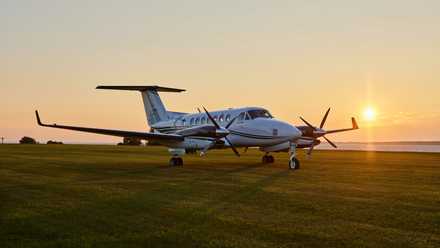
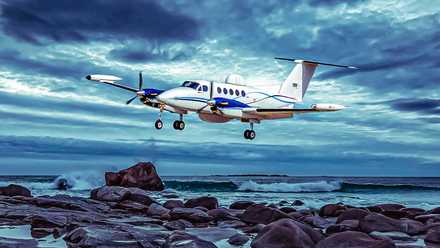
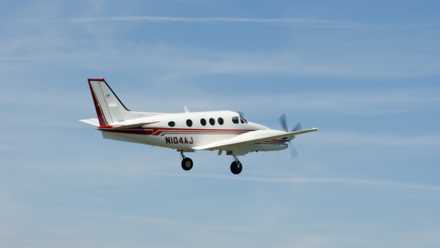
The Beechcraft King Air family remains one of the most economically significant platforms in business and regional turboprop aviation, and 2026 pricing reflects both the aircraft's enduring demand and the inflationary pressures reshaping the new aircraft market. Textron Aviation's current production King Air 260 carries a list price of approximately $7.78 million, while the stretched King Air 360 commands roughly $9.26 million. Those figures represent substantial capital commitments, but they also reflect meaningful engineering advances over earlier variants, including autothrottle systems on the 260 and 360 that can reduce hourly fuel burn by three to four percent compared to prior-generation models. The pre-owned market, by contrast, offers dramatically lower acquisition costs across a broad spectrum of variants spanning five decades of production, from the original 1972 E90 through the still-current C90GTx, creating an unusually wide selection of entry points for operators weighing mission requirements against available capital.
Total annual ownership costs across the King Air fleet reveal equally important distinctions that extend well beyond sticker price. For an owner flying a typical 300-hour annual profile, a mid-generation King Air B250 produces a total annual cost of approximately $709,000, while the older E90 reaches closer to $949,000 when all fixed and variable expenses are included. The data from cost analysis firms like CJ Jets illustrates the counterintuitive relationship between acquisition cost and operating economics: older, cheaper airframes frequently carry higher per-hour fuel and maintenance burdens that erode their initial purchase-price advantage over time. Fuel burn accounts for roughly half of all variable operating costs across the fleet, meaning operators in high-utilization environments face compounding exposure to jet-A price volatility regardless of which variant they operate. Fixed costs further complicate the picture because they are spread across hours flown, incentivizing higher utilization rates that may not align with a Part 91 owner's actual mission cadence.
Engine economics are a central driver of King Air ownership planning in ways that differentiate the platform from both piston twins and heavier cabin-class jets. The Pratt & Whitney Canada PT6A family across King Air variants carries an average time between overhaul of approximately 3,600 hours, which at typical utilization rates translates to a capital event that recurs roughly every eight to twelve years per powerplant. With overhaul costs reaching up to $500,000 per engine, the two-engine King Air presents a potential $1 million maintenance exposure per overhaul cycle. Operators not enrolled in engine programs such as Pratt & Whitney's ESP Gold bear this cost exposure directly, making program enrollment a significant financial planning variable rather than a simple convenience. Part 135 charter operators and fractional fleet managers are particularly attuned to this dynamic, as engine reserve accruals must be built into hourly pricing to remain financially sustainable across an aircraft's service life.
The King Air's sustained market position reflects broader structural forces in the turboprop segment. Global demand for pressurized twin turboprops capable of IFR operations in austere environments has remained robust, supported by medevac operators, charter companies, government agencies, and corporate flight departments operating in markets underserved by jet infrastructure. The King Air's PT6A powerplants are among the most widely supported engines in aviation, with overhaul and MRO capabilities available across every major operating region. This serviceability advantage is not incidental to purchasing decisions by operators in Africa, Latin America, and remote North American markets, where supply chain depth for alternative platforms is thinner. New entrants to the market such as the Daher TBM series and Pilatus PC-12 have captured single-engine turboprop demand, but the pressurized twin market continues to center on the King Air for operators whose operational risk posture or regulatory environment requires two engines. The 2026 pricing landscape effectively asks buyers to choose between new-aircraft reliability and residual value protection at $7–9 million, or older-airframe economics with elevated operating cost exposure, a calculus that experienced aviation operators and their financial advisors will calibrate closely against specific mission profiles and annual utilization targets.







 Read original article