Home : Air Facts Journal
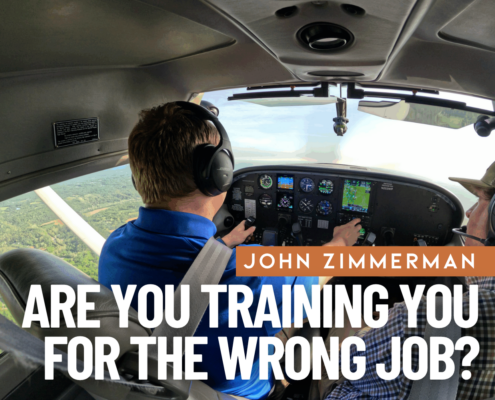
Air Facts Journal, now in its second decade as an online publication following its 2011 relaunch, continues to publish a content mix in May 2026 that reflects persistent tensions in general aviation: the gap between standardized training curricula and the real-world judgment demands of single-pilot operations. The journal's current editorial lineup spans personal checkride narratives, historical ferry flight accounts, and pointed opinion pieces from editor John Zimmerman, whose recent posts directly challenge the philosophical misalignment between airline-oriented flight school syllabi and the practical skill sets required by private and business aircraft operators flying Bonanzas, Comanches, and similar complex singles. That critique — that flight schools are producing capable systems managers but inadequate cross-country pilots — resonates with a structural problem that has intensified as Part 141 programs increasingly tailor their training pipelines toward regional airline hiring pipelines rather than the broader pilot population.
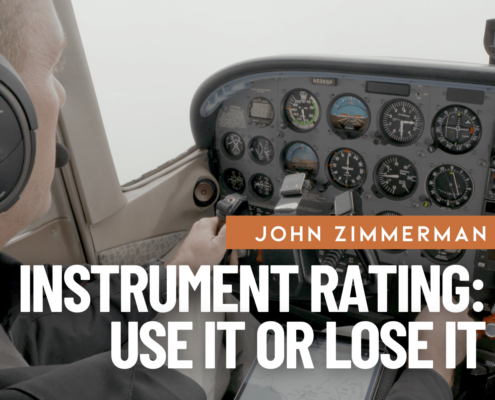
Zimmerman's concurrent argument about instrument currency strikes at a known safety failure mode in general aviation. Pilots who hold instrument ratings but rarely exercise them represent a disproportionate accident risk, particularly in IMC encounters during personal cross-country flights. The distinction he draws between pilots who can recite holding pattern entries and those who have genuine cloud-time experience maps directly onto NTSB accident data patterns, where continued VFR flight into IMC and loss of control during instrument approaches remain leading accident categories for non-commercial single-pilot operations. For corporate flight departments and Part 91 operators who rely on pilot-in-command currency as a risk management tool, this framing is operationally significant: a rating on a certificate does not constitute a capability without recent, genuine IMC exposure.
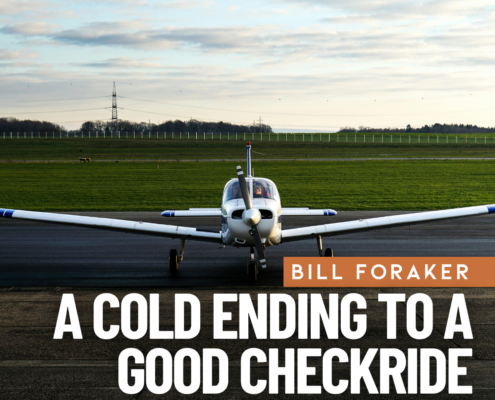
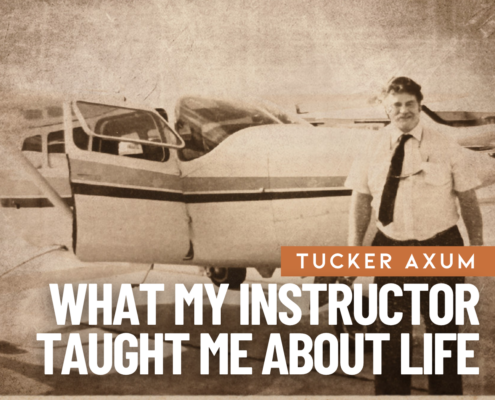
The broader editorial character of Air Facts in this period reflects a countercultural posture within aviation media. While much of the industry press covers fleet orders, regulatory rulemaking, and technology adoption, Air Facts draws its authority from experiential first-person accounts — checkride stories, in-flight emergencies repaired with improvisation at altitude over Greenland, cockpit errors that illustrate the hazards of complacency. This reader-written model, unchanged since Leighton Collins founded the publication in 1938, positions the journal as a repository of tacit knowledge that formal training documents rarely capture. For professional pilots — particularly those transitioning from structured airline environments into Part 91 or charter operations where crew resource management tools and redundant systems give way to single-pilot judgment — this kind of narrative literature serves a genuine educational function that recency requirements and simulator events do not fully replicate.
The recurring theme across the May 2026 content cycle is the relationship between practice volume and proficiency, most explicitly in Serrhel Adams's argument that thirty-minute focused flights — including full stall series, slow flight, and aerobatic sequences — represent an efficient and underutilized approach to maintaining precision airmanship. This argument has direct relevance for owner-flown business aircraft operators and Part 91 pilots whose flight hours are concentrated in IFR cross-country segments rather than the maneuvering flight that builds envelope awareness. Accident analysis consistently finds that pilots with high total time but low recent maneuvering experience are vulnerable in off-nominal situations precisely because the muscle memory and energy management instincts that define stick-and-rudder proficiency atrophy faster than instrument scan or procedural recall. Air Facts, by amplifying these arguments through accessible narrative, occupies a practical niche in ongoing pilot development that formal recurrent training programs leave substantially unfilled.










 Read original article