Why Airbus Is Changing The First Class Experience On The A350-1000
Airbus's First Class Master Suite concept, unveiled at the Aircraft Interiors Expo 2025 and developed specifically for the A350-1000 widebody, represents the manufacturer's formal entry into the cabin differentiation debate that has reshaped premium aviation economics over the past two decades. The design study — currently unconfirmed by any launch customer — proposes a 1-1-1 cabin configuration featuring a central Double Suite positioned between two aisles, offering a full-size double bed, private lavatory, dedicated changing area, mini-bar, and face-to-face dining. Because the center suite lacks access to fuselage windows, Airbus engineered a large curved digital display with ambient lighting to simulate natural light cycles and circadian-friendly environments, a feature increasingly relevant as ultra-long-range routes extend block times well beyond 16 hours. The concept also relocates lavatories, storage, and crew rest stair access into a separate central module outside the main passenger cabin, reclaiming premium floor space that would otherwise be consumed by infrastructure.
The strategic calculus behind the release is as significant as the design itself. Airbus is using the concept as a market-facing signal — simultaneously collecting airline feedback, asserting confidence in the long-term commercial viability of first class, and positioning the A350-1000 against Boeing's 777X as the preferred ultra-premium flagship for carriers rebuilding or launching high-yield cabin products. At present, only Japan Airlines and STARLUX Airlines operate first class aboard the A350-1000, and the configuration variance across operators is dramatic: JAL fields just 239 seats across four classes on the same airframe that French Bee configures for 480 economy seats. That elasticity is precisely what Airbus is marketing — the A350-1000 fuselage cross-section is wide enough to support radically different revenue strategies, and the Master Suite positions the aircraft at the highest-yield end of that spectrum.
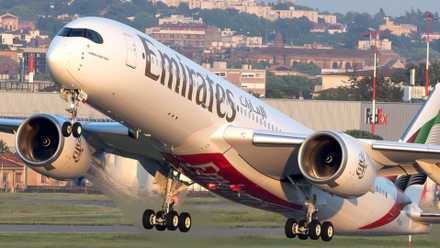
For airline operators and the flight crews who fly these routes, the broader implication is an accelerating convergence between commercial widebody operations and the product expectations historically associated with large-cabin business aviation. The driver is structural: since British Airways introduced lie-flat business class in 2000, the incremental luxury delivered at the business class level has so thoroughly compressed the experiential gap with first class that carriers like Delta, United, and most European legacy airlines have abandoned dedicated first class on long-haul routes entirely. Those that retained it — Emirates, Singapore Airlines, Qatar Airways — have responded by escalating first class into genuinely private, suite-style environments. Airbus's Master Suite concept formalizes that trajectory at the OEM level, essentially acknowledging that the next competitive frontier for premium commercial aviation is not seat pitch or bedding, but spatial privacy and sensory environment control approaching that of a private jet cabin.
For corporate flight departments and Part 91 operators who frequently benchmark their own product against premium commercial offerings, the concept is relevant as a directional indicator. As commercial carriers install quasi-private suites on high-frequency international routes, passenger expectations for what constitutes an acceptable private travel environment will continue to rise. The digital ambient lighting and circadian management features appearing in the Master Suite are already present in newer large-cabin business jets and represent a design language increasingly expected by high-net-worth travelers regardless of aircraft type. The gap between best-in-class commercial first class and large-cabin bizjet interiors is narrowing from both ends — a dynamic that will shape fleet and cabin investment decisions across the industry in the years ahead.





 Read original article