The Little-Known Reason The US Navy Still Chooses The F/A-18 Super Hornet Over The F-35C On Certain Missions
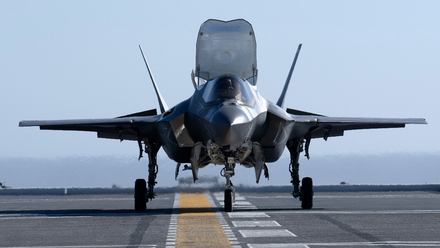
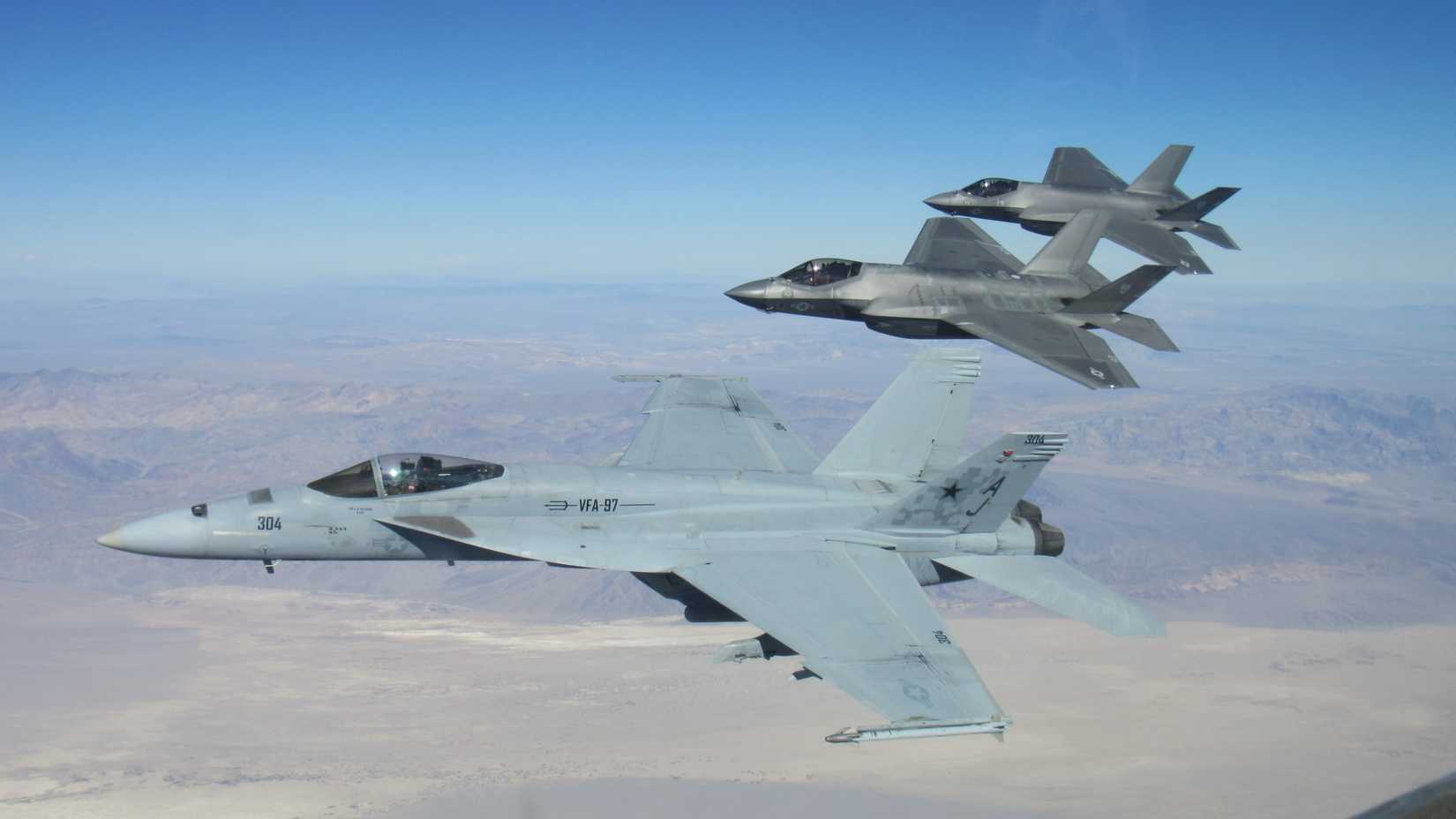
The US Navy's continued reliance on the Boeing F/A-18E/F Super Hornet alongside the Lockheed Martin F-35C reflects a deliberate, capability-driven fleet strategy rather than a transitional gap. As of mid-2026, the Navy operates approximately 550 Super Hornets and 150 EA-18G Growler electronic warfare variants, against a comparatively small F-35C fleet of roughly 100 aircraft. The F-35C was never designed to wholesale replace the Super Hornet; instead, it functions as a stealth-enabled enabler and intelligence-gathering platform, providing what operators describe as a "god's eye view" of the battlespace while legacy platforms carry heavier weapons loads. The Super Hornet's 11 hardpoints and maximum external payload of 17,700 pounds give it a significant strike capacity advantage over the F-35C's internal stealth configuration, which is limited to approximately 5,700 pounds — a real-world constraint that influences mission planning at the operational level regardless of the newer aircraft's other technological advantages.
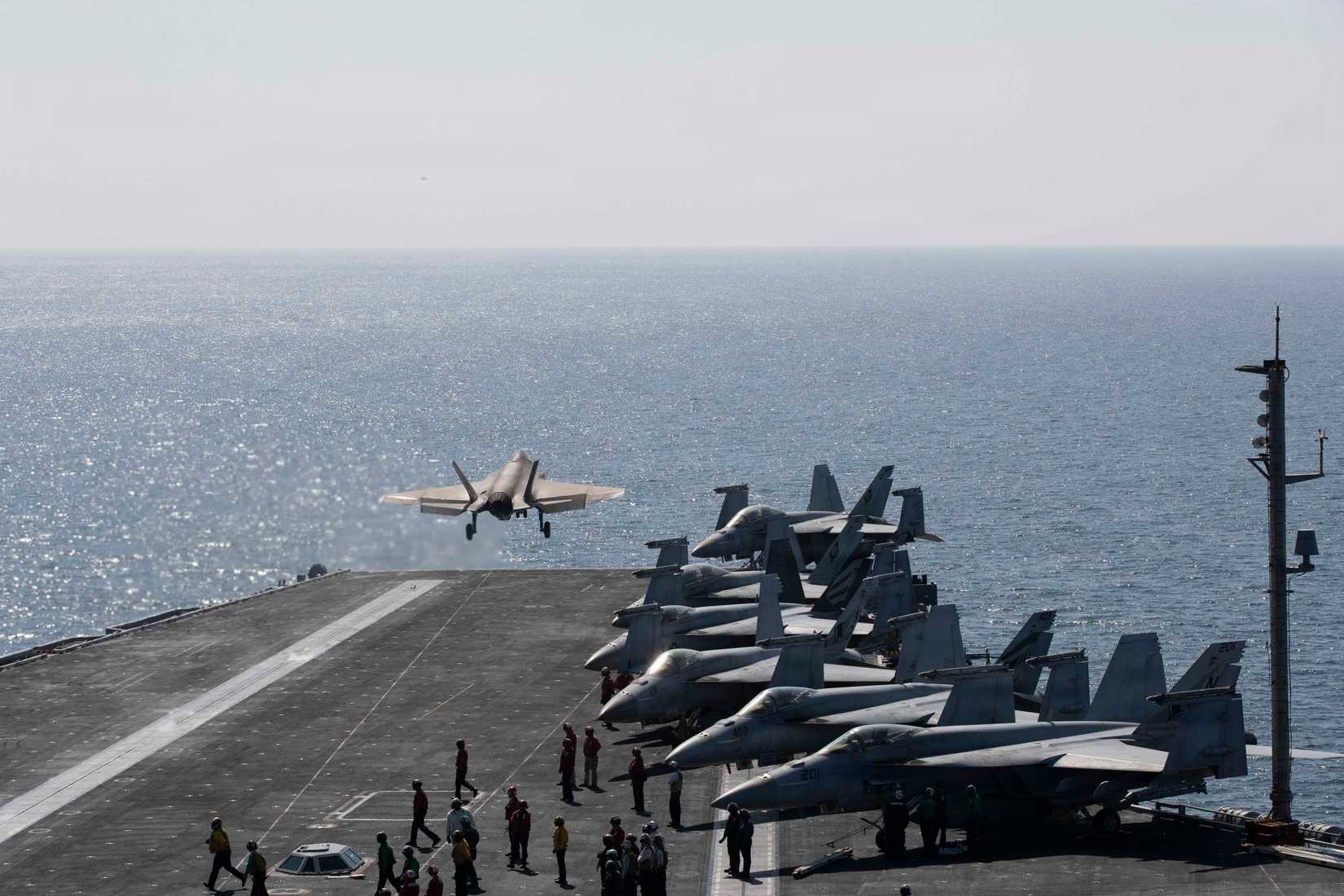
A structural readiness issue compounds the fleet composition math in ways that are not widely understood outside naval aviation circles. The USS Gerald R. Ford, the lead ship of the Navy's newest carrier class and the vessel behind the record-breaking 2025–2026 combat deployment, was laid down in 2009 before F-35C basing requirements were finalized. She was delivered without the deck heat tolerance modifications required to safely operate the F-35C's exhaust profile, meaning her air wing is effectively a Super Hornet-exclusive environment until retrofits are completed. The USS John F. Kennedy is expected to be the first Ford-class carrier delivered F-35C-certified, scheduled for 2027. Among the Nimitz-class fleet, five carriers — Carl Vinson, Abraham Lincoln, George Washington, Theodore Roosevelt, and George H.W. Bush — have completed certification, while the USS Nimitz is being decommissioned. This creates a patchwork operational reality where carrier strike group composition is directly tied to which hull is assigned, a logistical constraint that mission planners and air wing commanders must account for continuously.
The Marine Corps layer adds both capacity and complexity to how F-35Cs are actually deployed. The Marines currently operate over 50 F-35Cs alongside approximately 200 F-35Bs, and their aircraft regularly deploy aboard Navy carriers, effectively expanding the F-35C presence on certified ships by roughly 50 percent. The Corps is now revising its procurement mix to 140 F-35Cs and 280 F-35Bs — doubling the previous C-variant buy — while phasing out the last AV-8B Harrier IIs in 2026 and continuing to retire legacy Hornets as deliveries and ship certifications proceed. The Marines' transition to an all-F-35 fighter fleet, combined with the Navy's plan to take final Super Hornet deliveries in 2027 and sustain that fleet through the 2050s pending F/A-XX introduction around 2035, reveals a multi-decade mixed-generation force structure that is anything but accidental.
For professional pilots and aviation operators outside the military context, the Super Hornet's continued dominance illustrates a broader principle relevant across commercial and business aviation: platform maturity, supportability, and known-quantity reliability carry enormous weight in operational decision-making, often outweighing the appeal of more advanced systems that are still maturing in real-world service. The same economic and logistical logic that keeps older but well-understood aircraft types flying in commercial and corporate fleets — where maintenance infrastructure, crew qualification depth, and parts availability directly affect dispatch reliability — applies at the carrier strike group level. The F-35C's stealth and sensor capabilities are genuinely transformational, but the Super Hornet's proven sustainment ecosystem, payload flexibility, and suitability for a wider range of ship platforms make it the workhorse of choice for a significant share of daily carrier aviation operations. The parallel to mixed-fleet operations at Part 135 and Part 91K operators, where newer aircraft complement rather than immediately displace legacy types, is structural and not coincidental.







 Read original article