Ortberg: 737MAX at 47/mo, target is 63/mo in the future
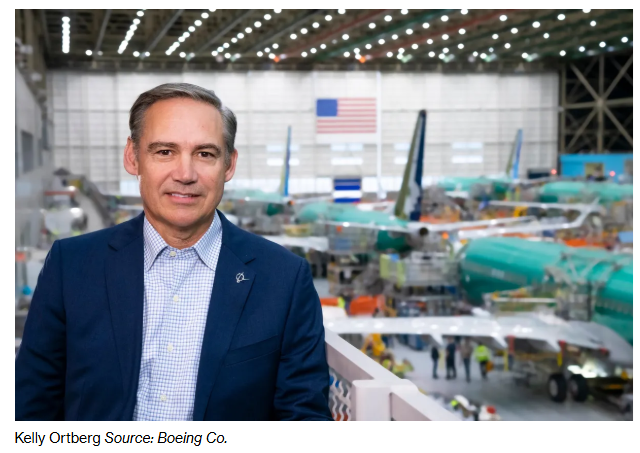
Boeing's 737 MAX production rate stands at 47 aircraft per month as of late May 2026, with CEO Kelly Ortberg signaling a measured, phased approach to eventual expansion toward a long-term target of 63 per month. Speaking at the Bernstein Strategic Decisions Conference, Ortberg emphasized that Boeing will spend months stabilizing operations at the current rate before seeking FAA approval to climb to 52 per month — the same rate the program held in March 2019 immediately before the dual-fatal-crash grounding that idled the fleet for 21 months. Unlike the pre-grounding era, when Renton was being pushed toward 57 aircraft monthly, Ortberg has explicitly abandoned the idea of running that single facility to its structural limits. Instead, Boeing is activating the North Line in Everett, Washington, a separate final assembly line that will initially operate at a lower rate and represent a near-term drag on margins before becoming a meaningful production and profitability contributor. The North Line also provides a manufacturing capability that Renton cannot: full nose-to-tail assembly of the 737 MAX 10, the longest and most complex variant in the family.
The certification status of the MAX 7 and MAX 10 carries direct implications for airline fleet planners and operators awaiting those variants. Ortberg disclosed that Boeing is approximately 80 percent complete with the certification flight test program for both aircraft, with simultaneous test campaigns running across multiple platforms — three 777s and two 737s flying concurrently. The MAX 7 is expected to receive type certification before the MAX 10 due to the larger variant's additional complexity. Both certifications are targeted for completion by year-end 2026, enabling a meaningful ramp in MAX 10 deliveries in 2027. For carriers that have placed orders contingent on MAX 10 entry into service, this timeline represents a concrete, if still cautious, commitment from Boeing leadership after years of slippage. Airlines operating or evaluating the current MAX 8 and MAX 9 fleet will also note that production continuity at 47 per month, combined with stable quality processes emphasized by Ortberg, suggests fewer of the workmanship escapes and post-delivery rework events that plagued earlier output.
The 777X program remains the most financially consequential unresolved item on Boeing's commercial aircraft ledger. Ortberg confirmed that 777-9 flight test work is expected to wrap up by end of 2026 with one significant exception: ETOPS certification, the extended overwater twin-engine operational approval required before airlines can fly the type on long transoceanic routes. That final certification phase will carry into 2027, pushing full revenue-generating deliveries into next year at the earliest, with bulk handovers expected in 2028. The program has consumed $15.729 billion in write-offs to date, with an additional $2 billion in cash burn projected through 2026 and 2027. For operators — particularly the large Gulf carriers, Asian flag carriers, and U.S. network airlines that are anchor customers for the 777-9 — the ETOPS delay is operationally significant. An aircraft certified for type but not yet ETOPS-approved cannot be deployed on the ultra-long-haul routes that represent its primary commercial mission, meaning even early deliveries will have restricted utility until that approval is in hand. The 777X-F freighter, meanwhile, is tracking roughly two years behind the passenger variant, a reality that will keep cargo operators reliant on the legacy 777F and competing Airbus widebodies for the foreseeable future.
The 787 Dreamliner program presents a different category of operational friction: aircraft are being completed at 8 per month in Charleston but are sitting finished and undelivered due to seat certification backlogs. Ortberg described the problem explicitly — interiors vary so substantially by airline customer that each new seating configuration requires its own FAA and EASA certification process, and Boeing is working through a substantial queue of those approvals simultaneously. This creates delivery lumpiness that affects airline capacity planning, particularly for carriers that have built schedule expansion or fleet transition timelines around specific 787 arrival dates. The seat certification bottleneck does not reflect a structural manufacturing defect but rather a regulatory process throughput constraint compounded by the sheer volume and diversity of cabin configurations Boeing is certifying at once. For Part 91 and charter operators watching the commercial widebody market, the compressed delivery schedules and eventual resolution of these backlogs will influence used and lease market pricing on the 787 family as deferred deliveries eventually clear and the supply picture normalizes.
Taken together, Ortberg's public statements at Bernstein represent a production and certification roadmap that is more conservative, more transparency-oriented, and more explicitly sequenced than Boeing's pre-crisis communications. The deliberate staging of rate increases, the acknowledgment of near-term margin headwinds from the North Line ramp, and the candid discussion of ETOPS delays on the 777-9 reflect a management posture shaped by the regulatory, financial, and reputational consequences of the MAX grounding and the years of quality failures that followed. For the broader commercial aviation ecosystem — airlines, lessors, MROs, and the pilot workforce — Boeing's stabilization matters because single-source dependency on 737 MAX narrowbody production underpins a significant share of global short-to-medium-haul capacity planning. A credible path to 63 aircraft per month, if Boeing can execute it, would meaningfully ease the supply constraints that have kept aircraft values elevated, lease rates firm, and pilot demand intense across the industry since 2021.





 Read original article