What’s a Hawker?
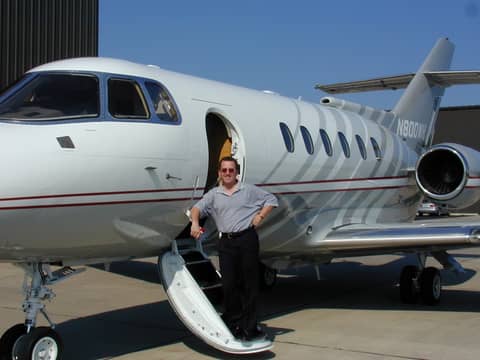
The Hawker family of midsize business jets traces its lineage not to the iconic British fighter manufacturer Harry Hawker founded, but to a 1961 de Havilland design program at Hatfield, England, conceived around a deceptively simple mission requirement: carry six passengers in a stand-up cabin at 500 mph with an onboard lavatory. That internal project, nicknamed the Jet Dragon, produced the HS-125, a platform that would survive six decades of production, roughly 1,700 airframes, and a corporate ownership chain so convoluted it reads more like a private equity case study than an aviation lineage. De Havilland's design passed through Hawker Siddeley, British Aerospace, a BAe modification center in Little Rock, Raytheon, and ultimately Hawker Beechcraft before the company filed Chapter 11 and ceased jet production entirely in 2012. The name "Hawker" itself was formally applied by Raytheon only after acquiring the program, a branding decision that stuck so firmly in the industry that operators and dispatchers today still use it reflexively regardless of model year or precise variant.
For working pilots, the aircraft's design philosophy produced an unusually coherent set of handling characteristics across all variants. Mechanical flight and trim controls connected through cables to a ram's-horn yoke kept the cockpit deliberately simple and imposed the Mach 0.78 cruise limit that many pilots mocked but that also made the airplane predictable and honest in its feedback. The double-slotted flaps spanning 55 percent of the 51-foot wing, combined with a hydraulically actuated lift-dump system that deflected those surfaces to 75 degrees on rollout, gave the Hawker short-field stopping performance that many operators considered superior to thrust reversers — which remained optional for much of the aircraft's production life. TKS fluid anti-icing through porous stainless steel leading edges, a ventral fuel tank contributing to a 10,000-pound total fuel load, and a center of gravity envelope pilots described as nearly impossible to exceed rounded out what the industry eventually called the "Chevy Suburban" of business jets: not glamorous, not fast, but extraordinarily forgiving and capable of absorbing rough treatment without complaint. One certified use case — rough field operations — underscored just how conservative the structural margins were.
The engine evolution across the Hawker line reflects broader turbine development in the midsize segment over five decades. Bristol Siddeley Viper engines producing roughly 2,900 pounds of thrust per side powered the early variants, eventually giving way to the Garrett TFE731s at 3,750 pounds and finally the Pratt & Whitney Canada PW305s at 5,200 pounds on the 1000 series, extending range from approximately 1,000 nautical miles with reserves to 3,000 nautical miles. The Hawker 4000, certified in 2006 and built from scratch in Wichita in an all-composite airframe, represented a significant departure from the baseline HS-125 architecture — 10,000 pounds heavier than the 700/800/900/1000 series and powered by PW308As producing 6,900 pounds each — but the bankruptcy of Hawker Beechcraft ended that program before it could achieve meaningful fleet penetration. Textron Aviation now maintains support infrastructure for the existing fleet through 20 global service centers, sustaining an orphaned but substantial installed base.
The recent loss of two Hawkers — an 800XP and a 900XP within two years — has returned meaningful scrutiny to a fleet that had largely faded from accident investigation headlines. Both accidents reportedly evolved from pilot judgment failures, and the proximity in circumstance has prompted renewed discussion among operators about crew resource management, type-specific training standards, and whether the airplane's forgiving handling characteristics may paradoxically reduce the urgency with which some crews treat deteriorating situations. For Part 135 operators and fractional programs that still carry Hawkers on their certificates, these events reinforce the ongoing regulatory and insurance industry pressure to mandate recurrent simulator training in type, not just general turbine currency. The broader lesson for any operator flying a mature, thoroughly understood airframe is that familiarity can suppress vigilance — and that an airplane earning a reputation for bringing crews home reliably does not reduce the margin for command error.


 Read original article