10 Hull Losses Since 1990: Why The MD-11 Has The Worst Safety Record Of Any US Widebody
The McDonnell Douglas MD-11 trijet holds the distinction of being the worst-performing widebody aircraft by hull-loss rate among US-designed jets of its era, with 11 hull-loss accidents across a production run of just 200 airframes — a loss rate approaching 5.5% of the total fleet. That figure stands in sharp contrast to contemporary widebody designs such as the Boeing 777, 747-400, Airbus A330, and A340, all of which accumulated far more flight hours with substantially fewer catastrophic losses. The MD-11's accident record spans more than three decades, from the 1998 Swissair Flight 111 disaster that killed all 229 aboard to the 2025 UPS Flight 2976 engine and pylon separation on takeoff that killed 15. The concentrated cluster of losses in 1999 alone — three hull-loss events in a single calendar year — underscores that the aircraft's risk profile was not merely statistical noise but reflected systemic handling characteristics that repeatedly challenged flight crews across multiple operators and continents.
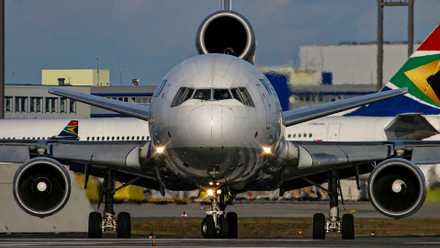
The aircraft's fundamental aerodynamic shortcomings trace directly to the engineering tradeoffs McDonnell Douglas made when evolving the DC-10 platform into the MD-11. In pursuit of improved fuel efficiency and range, designers reduced the horizontal stabilizer area and implemented a digital flight control system with active load alleviation — changes that tightened the aircraft's pitch stability margins considerably. The DC-10 was already known for a responsive pitch, but the MD-11 made that characteristic more pronounced and less forgiving. The result was an aircraft that required precise, disciplined technique at every phase of flight, but most critically during approach and landing. Touchdown speeds routinely ranging from 150 to 170 knots — and sometimes exceeding 170 knots in heavy or gusty conditions — left minimal margin for technique errors, crosswind corrections, or bounced landing recoveries. The DC-10, by contrast, typically flew final approach at 140–150 knots at maximum landing weight, providing meaningfully more energy management flexibility for line crews.
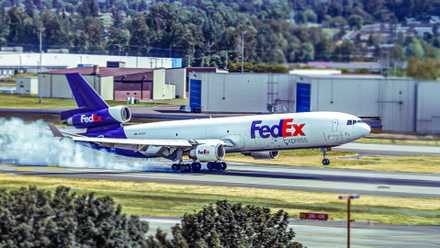
Several of the MD-11's most instructive accidents share a common thread: the aircraft's sensitivity punished recoveries that would have been manageable in other widebodies. FedEx Flight 80's 2009 crash at Tokyo Narita — following a bounced landing in gusty conditions that led to a nose strike and rollover — closely mirrors the dynamics of the 1997 FedEx Flight 14 accident at Newark. Both involved heavy cargo configurations, elevated landing speeds, and an aircraft that offered little forgiveness once the energy state diverged from the narrow acceptable band. The 2010 Lufthansa Cargo Flight 8460 loss in Riyadh, and the 2009 Avient Aviation crash, further demonstrate that the fleet's exposure was not concentrated in a single operator or region but was a persistent, aircraft-type-specific risk that manifested across different companies, crew cultures, and training programs. For cargo operators — who flew the MD-11 at or near maximum weight far more consistently than passenger carriers — these margins were consistently thin.
For professional pilots and aviation operators, the MD-11's record carries lasting relevance as a case study in the limits of aerodynamic optimization when conducted without sufficient margin preservation. The aircraft's development illustrates a risk that remains present in modern type certification philosophy: performance improvements achieved by reducing stability reserves can produce aircraft that perform well in average line conditions but degrade rapidly at the edges of the operational envelope. The broader fleet context reinforces this point. The Airbus A350 and Boeing 787 Dreamliner — with just one hull loss each across combined deliveries exceeding 1,900 airframes — represent what modern design philosophy, fly-by-wire stability augmentation, and expanded envelope protection can achieve. The MD-11's era predated mature digital envelope protection, and its crew interface did not consistently alert pilots to how quickly their energy state could deteriorate. For Part 91, 135, and airline operators evaluating aging fleet assets, the MD-11 record is a reminder that type-specific training depth, recurrent sim exposure to edge-of-envelope scenarios, and honest appraisal of aircraft handling margins are not administrative requirements but direct accident-prevention tools.
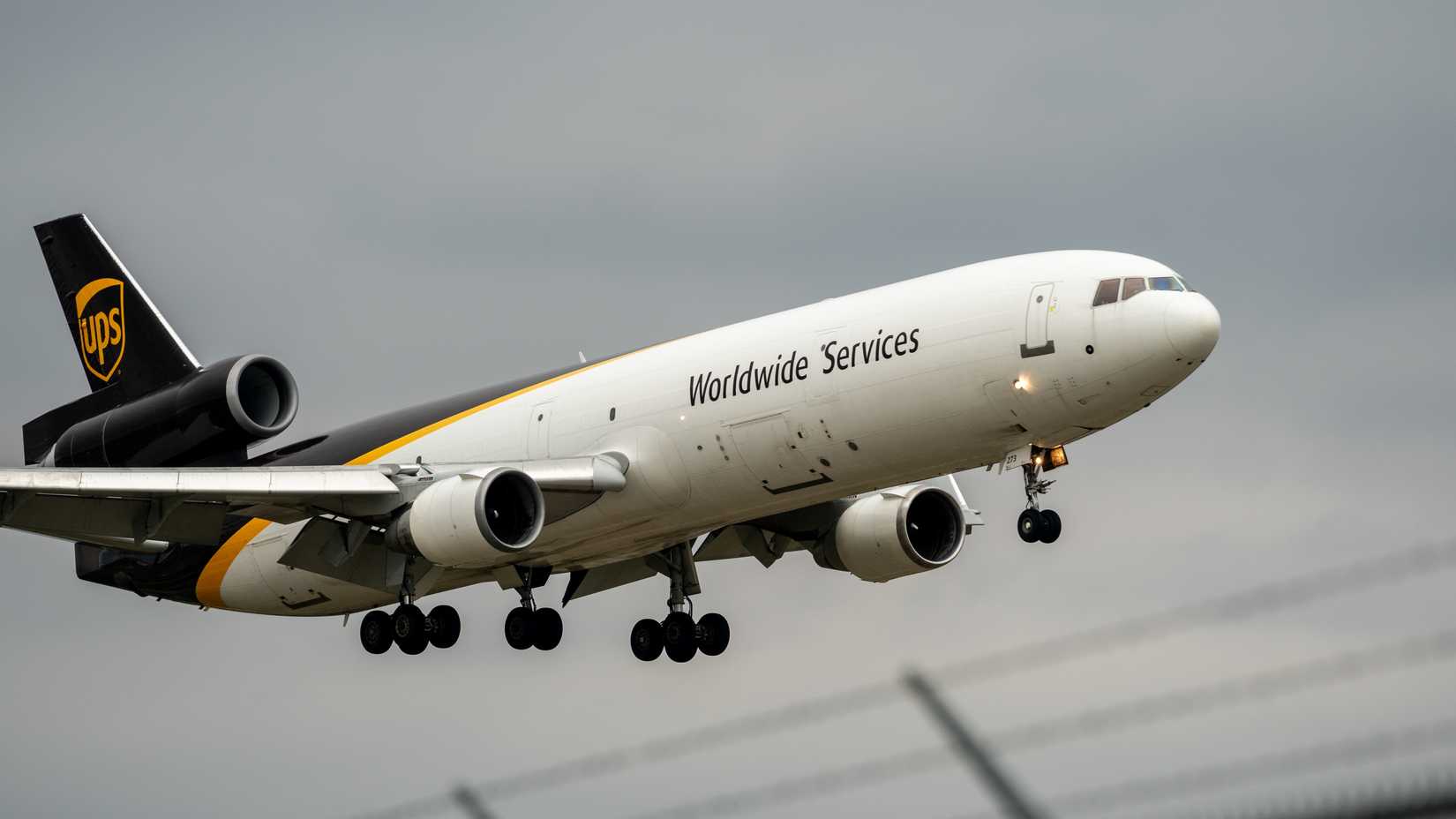
The MD-11's impending retirement from cargo service — with UPS accelerating fleet drawdown following the 2025 accident — will close a chapter that is unlikely to be revisited. The aircraft's commercial legacy is real: it served reliably on long transoceanic routes for decades, and many pilots who flew it developed genuine respect for its capability and character. But its safety record, viewed honestly against contemporaries, reflects what happens when an airframe's performance envelope is optimized to the edge without corresponding advances in crew interface and protection systems. Aviation safety data from the MD-11 era contributed directly to the regulatory and manufacturer focus on energy awareness, stabilized approach criteria, and go-around culture that now forms the backbone of threat and error management training worldwide. In that sense, the MD-11's accidents were not wasted — their lessons are embedded in how widebody crews are trained today.











 Read original article