Why Airlines Are Cutting Open Retired Boeing 777s & Turning Them Into Freighters
The global air cargo industry is confronting a structural capacity problem driven by the accelerating retirement of Boeing 747 freighters and an inadequate supply of factory-built replacements. The Boeing 777-200F, currently the primary twin-engine heavy freighter in production, carries meaningfully less volume than the 747s it nominally replaces — a gap that has become increasingly consequential as e-commerce freight volumes demand high-cube capacity on long-haul routes. The answer that has emerged is a passenger-to-freighter conversion program built around retired Boeing 777-300ERs, producing the 777-300ERSF, an aircraft developed by Israel Aerospace Industries in partnership with lessor AerCap. The program received Supplemental Type Certificates from both the FAA and Israel's Civil Aviation Authority following an extensive validation campaign, and Kalitta Air, the Michigan-based cargo carrier that signed on as launch operator in 2020, had taken delivery of seven converted aircraft by the end of 2025. The program's public visibility accelerated when video of a Kalitta 777-300ERSF making a hard landing at Miami International circulated widely on social media, drawing widespread attention to a conversion type that had been advancing through certification largely outside mainstream awareness.
The engineering scope of the conversion is substantially more invasive than a typical passenger-to-freighter program. IAI's process begins with cutting a large main-deck cargo door opening into the rear left fuselage — a modification that requires extensive structural reinforcement to restore the load-bearing integrity of one of the most highly stressed sections of the airframe. The composite passenger floor is removed entirely and replaced with reinforced aluminum flooring engineered to handle the point loads generated by cargo pallets and ground support equipment. A 9g-rated rigid barrier is installed at the forward end of the main deck to protect the flight deck from cargo shifting during sudden deceleration events. All passenger cabin systems — galleys, lavatories, overhead bins, in-flight entertainment infrastructure — are stripped, and the electrical and environmental systems are reconfigured for a cargo operating environment. The external airframe, wings, engines, and landing gear remain unchanged throughout the process, which is where the economic logic of conversion versus new manufacture becomes most apparent. Each conversion takes approximately five to five and a half months at IAI's Tel Aviv facility, and the first two Kalitta aircraft were former Emirates 777-300ERs that were 19.3 and 20.5 years old at the time of conversion — airframes that had completed full passenger careers before entering the conversion line.
For cargo operators and the pilots who fly for them, the 777-300ERSF addresses a capability gap that the current production freighter fleet cannot fill. The 777-300ER's larger fuselage cross-section translates into more main-deck volume than the 777-200F, giving the converted type a meaningful advantage on routes where cube, not weight, is the binding constraint. For crews transitioning to the type, the conversion's retention of the original airframe's wings, engines, and flight control architecture means the aircraft handles with the aerodynamic characteristics of a well-understood platform, even as the interior systems configuration differs substantially from both the passenger variant and the factory-built freighter. Kalitta Air's rapid accumulation of seven aircraft in the program's first delivery period signals operator confidence in the type's operational readiness, and the FAA certification of the structural modifications provides the regulatory foundation that cargo airlines operating under Part 121 require before integrating a new type into scheduled service.
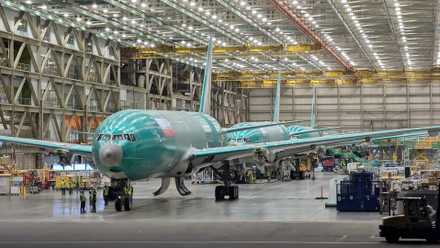
The 777-300ERSF program reflects a broader pattern that has been gaining momentum across commercial aviation: the recognition that the secondary market for high-quality widebody airframes represents a productive resource for fleet construction, particularly when new-aircraft delivery timelines are stretched and acquisition costs for factory-built freighters are high. The pool of candidate 777-300ERs is large and growing, as network carriers continue to retire the type in favor of newer widebodies. Boeing's own 777-8F, which rolled out in Everett as a next-generation factory-built freighter, represents the long-term direction of the heavy freighter market, but its entry into service remains years away for most operators. In the interim, conversion programs like the IAI 777-300ERSF occupy a strategically important position — delivering heavy freighter capacity at economics that a midlife airframe purchase and conversion can support more readily than a new-build order. For operators, lessors, and the crews who will fly these aircraft, the program represents a pragmatic bridge between the retiring 747 era and the next generation of purpose-built heavy freighters.










 Read original article