News, Events, and Info For Media - AskThePilot.com
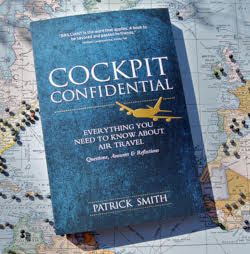
Patrick Smith, a working airline pilot and founder of AskThePilot.com, has established himself over more than two decades as one of the most frequently consulted aviation voices in mainstream media, with appearances across more than 300 radio and television outlets including CNN, PBS, the BBC, MSNBC, and National Public Radio. His media presence page functions as a formal press resource, cataloguing engagements dating back to at least 2015 and spanning a notably diverse geography — Canadian regional radio, Irish talk programs, Indian television, Australian broadcasting, and major U.S. network affiliates. TIME magazine recognized him among its "25 Best Bloggers," and his written commentary has appeared in The New York Times and the Boston Globe. The breadth and longevity of this media footprint reflect a sustained demand from editors and producers for credentialed, accessible aviation expertise that can translate technical realities into language accessible to general audiences.
The topics Smith covers span the full range of issues that define modern commercial aviation's public-facing challenges: accident analysis, air safety statistics, fear of flying, airport security, pilot training culture, and airline service economics. This combination is significant for professional pilots because it identifies the precise intersection points where the industry's technical operations meet public perception and regulatory scrutiny. When major incidents occur — such as the January 2023 ATR turboprop crash in Nepal or the Potomac River midair collision referenced in the research context — media outlets turn to sources like Smith to contextualize NTSB data, TCAS behavior, and crew decision-making for audiences who lack technical backgrounds. The framing that emerges from these appearances directly shapes public and legislative attitudes toward pilot training standards, staffing requirements, and airline regulation.
The clustering of Smith's media appearances around specific periods reveals the aviation industry's recurring pressure points. The March 2019 surge across Fox News, MSNBC, CBC, KCBS, and multiple Canadian outlets coincides directly with the grounding of the Boeing 737 MAX following the Ethiopian Airlines Flight 302 accident, a crisis that dominated global aviation coverage for months. The August 2018 wave across Boston Public Radio, WNYC, and multiple Canadian stations tracks similarly with summer operational disruptions and ongoing scrutiny of airline consolidation effects on service quality. The 2022 appearances align with Heathrow's baggage collapse and Amsterdam Schiphol's imposed flight caps during the post-pandemic travel surge — a period that exposed fragile ground handling infrastructure and understaffed operations across European hubs. Professional pilots and operators navigating those environments in real time were simultaneously watching public narratives form around the same events.
For airline crews, corporate flight departments, and charter operators, the existence of high-profile aviation communicators like Smith carries practical implications beyond public relations. The topics his media work elevates — cockpit automation boundaries, windshield depressurization procedures, flap and slat system logic, the statistical context of accident rates — are subjects that flight departments sometimes struggle to communicate accurately to passengers, boards of directors, and risk managers. When a credentialed, peer-sourced voice establishes accurate baseline expectations for aviation safety in the popular press, it reduces the friction operators encounter when explaining operational decisions, safety margins, or weather-related delays to non-pilot stakeholders. IATA's designation of 2023 as the second-safest year in commercial aviation history — with zero fatal jet accidents across 37 million flights — is precisely the kind of data point that, when amplified correctly, supports the safety culture professional aviation has built through decades of SMS development, CRM training, and regulatory oversight.
The sustained international reach of Smith's media engagement also reflects a structural reality about aviation journalism: the industry produces few credentialed pilot-communicators willing to engage with mainstream media consistently across a multi-decade arc. Most pilots who hold type ratings, line experience, and active certificates lack the time, platform, or inclination to translate that expertise into sustained public commentary. The demand for such voices — visible in the diversity of outlets from London's Times Radio to NDTV India to Houston's FOX 26 — underscores a persistent gap between what professional aviation understands about its own safety record and operational complexity, and what the public and policymakers receive through general media. Smith's model of continuous, platform-agnostic engagement across the full news cycle represents one documented approach to narrowing that gap, with measurable consequences for how aviation regulation, pilot hiring standards, and airline accountability are discussed at the policy level.





 Read original article