6-Hour Flights: Southwest Launches Longest Domestic Route Ever From Its Busiest Airport
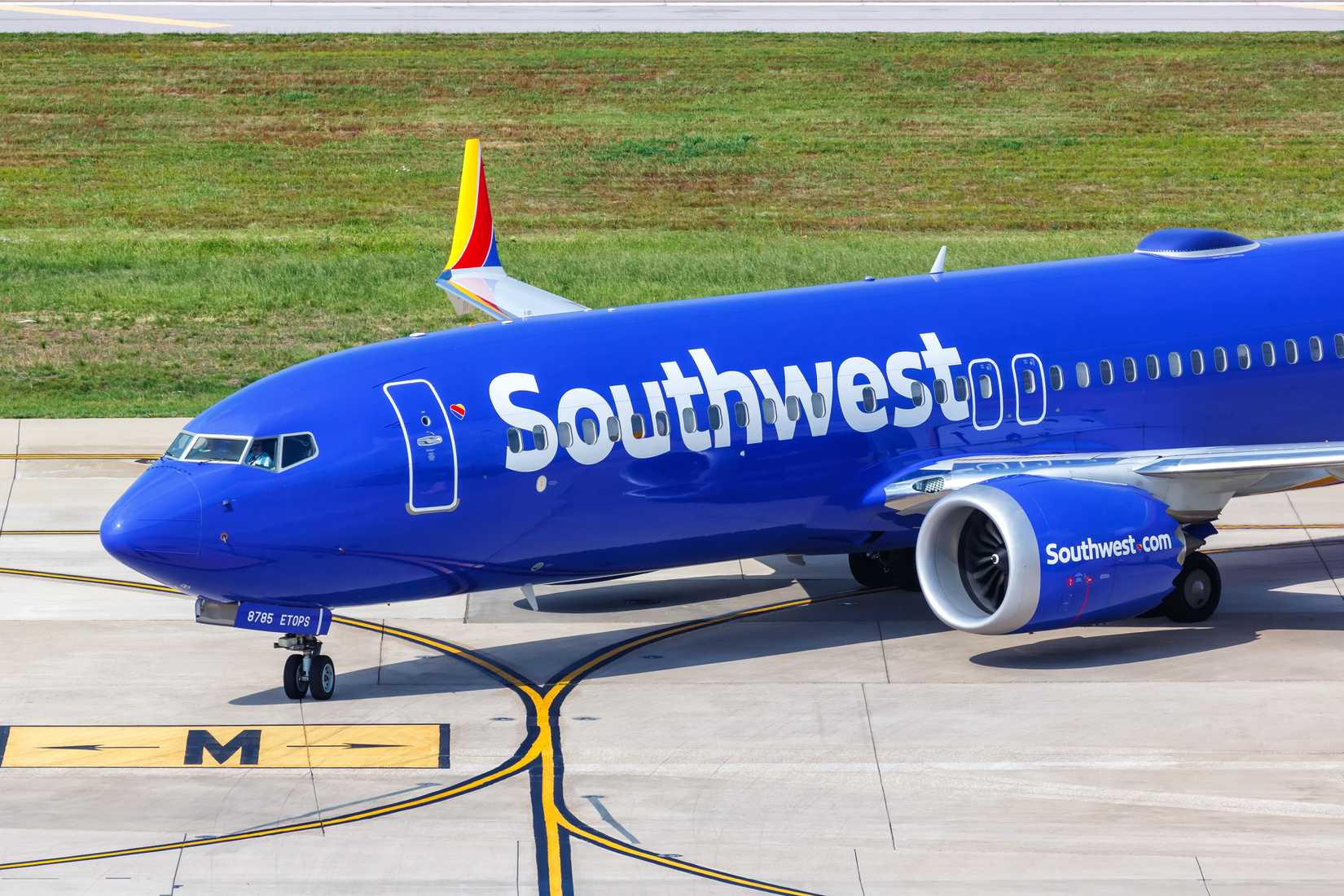
Southwest Airlines formally entered Alaskan service on May 15, 2026, inaugurating scheduled 737 MAX 8 flights between Denver International Airport and Ted Stevens Anchorage International Airport — a corridor that immediately became the carrier's longest domestic route in its history. Flight WN3094 departs Denver at 5:40 PM and blocks in at 9:15 PM Anchorage time, representing a scheduled block time of five hours and 35 minutes outbound, with the return leg clocking five hours and five minutes. A second Anchorage gateway from Las Vegas Harry Reid International is operating simultaneously, with 123 annual frequencies planned compared to Denver's 116, and the Las Vegas rotation carries a slightly longer return block of five hours and ten minutes. Both routes are seasonal, running daily through early September, with Las Vegas extending one week further to September 14. The new DEN-ANC pairing surpasses Southwest's previous longest domestic departures from Denver — the LaGuardia and Boston Logan runs — by a full 45 minutes in block time, a margin that underscores the geographic scale of Alaska operations even within the domestic airspace system.
From an operational standpoint, the DEN-ANC pairing presents meaningful considerations for pilots and dispatchers accustomed to Southwest's predominantly shorter-haul, high-frequency domestic model. The 737 MAX 8, while a capable and fuel-efficient narrowbody, is being asked to sustain roughly five hours of actual airborne time on the outbound leg, placing it toward the upper practical range for the type on a domestic mission. Fuel planning, ETOPS-adjacent contingency thinking for overwater or remote terrain segments through Canadian airspace, and crew rest scheduling for the overnight return departure at 10:25 PM Anchorage time all represent planning layers not typically associated with Southwest's bread-and-butter operations. Pilots holding type ratings on the MAX and considering line positions or contractual implications of extended domestic flying will recognize that block times of this magnitude carry crew pairing and duty day implications that differ substantially from a typical two-hour Southwest turn.
Alaska's operational environment adds a further dimension for aviation professionals to consider. Ted Stevens Anchorage International sits in a challenging meteorological and geographic context — subject to rapidly changing weather, mountainous terrain approaches, and seasonal light conditions that differ dramatically from the lower 48. While Anchorage itself is a major hub with robust ILS infrastructure and airline support services, the broader significance is that Southwest is now exposed to Alaskan operational risk factors for the first time, including the state's notorious weather variability and the logistical complexity of irregular operations at the far end of a five-plus-hour corridor. The Alaska Department of Transportation's emphasis on air travel as a "lifeline" reflects the thin competitive landscape in Alaskan markets — a dynamic where schedule reliability and carrier commitment carry outsized weight relative to comparable domestic routes in the contiguous 48 states.
The broader industry context positions Southwest's Alaska entry as a competitive incursion into territory long dominated by Alaska Airlines and, to a lesser extent, United. Southwest's low-cost model and open-seating structure represent a genuine disruptive force in a market where Alaskans have historically paid premium prices for limited connectivity to the lower 48. For business aviation and Part 91/135 operators serving Alaskan clientele, the introduction of affordable scheduled service on the DEN-ANC and LAS-ANC corridors could suppress demand for charter lift on those specific city pairs, particularly for price-sensitive corporate travel. However, Southwest's seasonal-only operation — ending in September — leaves the winter market, often the most logistically demanding period in Alaska, unserved by the new entrant, preserving a meaningful role for charter and supplemental operators during the high-demand cold-weather months when scheduled capacity tightens.
Southwest's expansion also reflects a strategic maturation for a carrier historically reluctant to stretch beyond its core network philosophy. Operating sub-six-hour flights on 737 MAX equipment into a remote, operationally complex state represents a deliberate network evolution, likely driven by post-pandemic demand patterns favoring leisure travel to unique domestic destinations and the competitive pressure to deploy MAX deliveries productively. For pilots tracking fleet utilization and network trends, the Alaska routes signal that low-cost carriers are willing to challenge the operational assumptions that previously reserved long domestic thin routes for legacy network carriers with widebody or premium narrowbody options. Whether Southwest sustains Alaska flying into future seasons, and whether additional gateways such as Seattle or Phoenix follow, will be closely watched indicators of how the carrier intends to position the 737 MAX 8 as a long-thin domestic instrument in the years ahead.











 Read original article