Why The US Air Force Is Scrapping 119 F-15E Strike Eagles But Keeping The Other 99
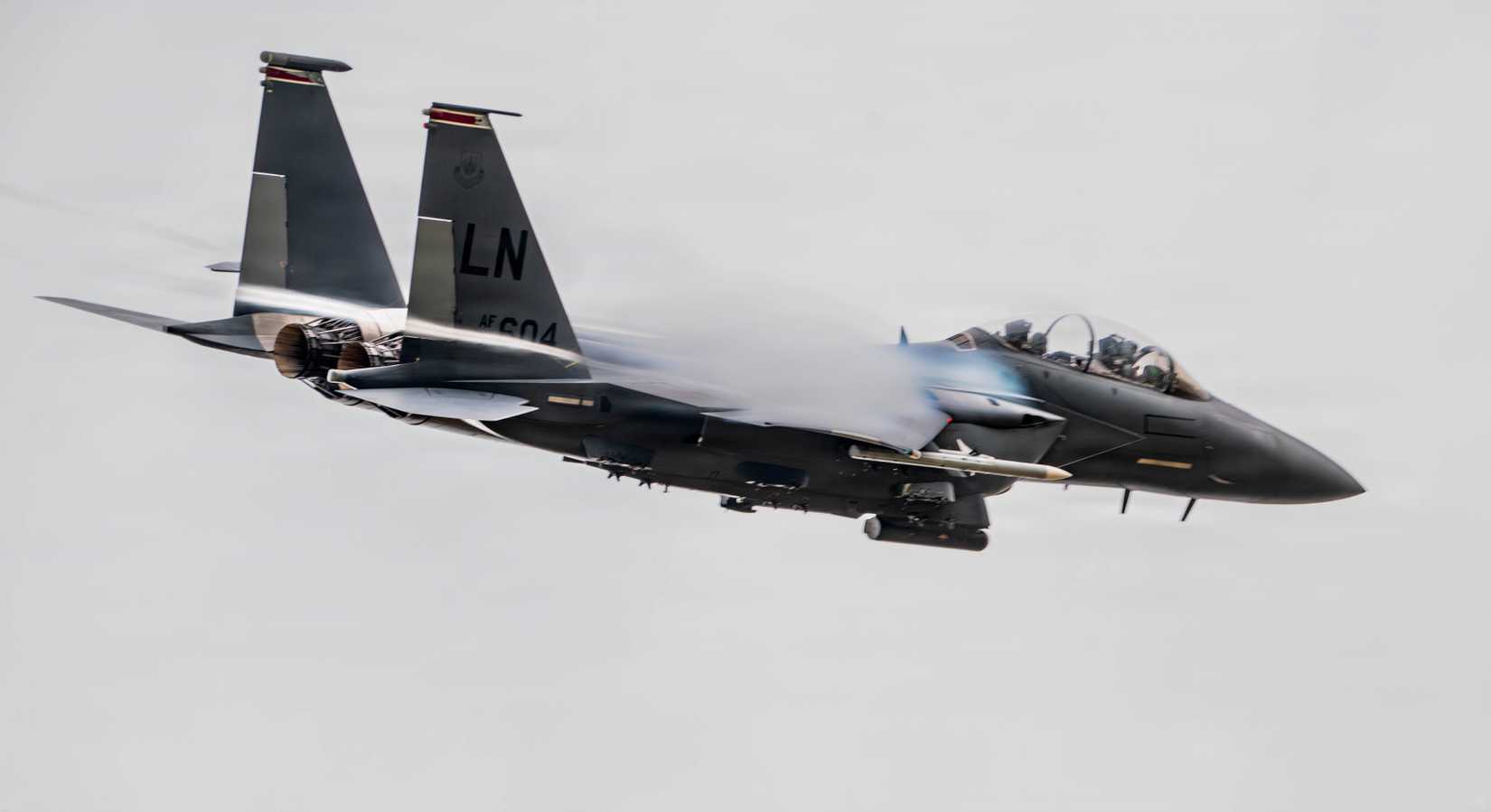
The US Air Force is executing a deliberate, engine-based triage of its F-15E Strike Eagle fleet, retiring 119 airframes powered by the older F100-PW-220 engines while retaining 99 jets equipped with the more powerful F100-PW-229 powerplants, which each produce 29,000 pounds of thrust. The retained aircraft will receive the Eagle Passive Active Warning Survivability System (EPAWSS) electronic warfare upgrade, the AN/APG-82 Active Electronically Scanned Array radar, and the Advanced Display Core Processor II — the same mission computer being installed as standard equipment on the newer F-15EX Eagle II. Simultaneously, the Air Force reversed a years-long trend of shrinking annual procurement targets by doubling its F-15EX order from 129 to 267 aircraft, with Boeing delivering at a rate of 24 per year at approximately $3 billion annually. The current EX fleet stands at 25 airframes, making this a significant long-term recapitalization commitment with a clear industrial-base logic: the two variants share supply chains, support infrastructure, and now a common sensor suite.
The strategic rationale behind retaining a mixed fleet of upgraded F-15Es alongside new F-15EXs centers on maximizing payload capacity and electronic warfare capability as complementary enablers for 5th- and emerging 6th-generation platforms. The F-15 family carries a payload that no stealth aircraft can match — 23,000 pounds on the Strike Eagle and 29,500 pounds on the Eagle II — precisely because external hardpoints aren't constrained by internal weapons bay geometry. The F-15EX's advanced fly-by-wire system allows it to load outermost wingtip stations without flutter-induced stress, enabling a 22-missile air-to-air loadout compared to eight on the legacy F-15E. This "arsenal ship" concept positions the Eagles as standoff weapons trucks, cueing targets designated by stealth aircraft operating forward in denied airspace and delivering hypersonic weapons including the Hypersonic Attack Cruise Missile, for which the F-15E is already the primary test platform.
For aviation professionals and operators tracking military procurement trends, this decision signals a broader doctrinal and industrial shift away from sole reliance on stealth platforms. The Air Force is explicitly building a layered force structure where high-payload, highly networked 4.5-generation aircraft operate in coordination with low-observable assets — a model that acknowledges the cost and quantity constraints inherent in stealth programs. The engine-based selection criterion for F-15E retention is also notable from a sustainment standpoint: rather than arbitrary airframe age or flight hours, the retention decision was driven by propulsion system capability and upgrade potential, a methodology that reflects the increasing importance of modular systems architecture in fleet lifecycle planning.
The doubling of the F-15EX buy carries direct implications for Boeing's defense production pipeline and for the broader aerospace supply chain at a moment when defense contractors are navigating significant capacity and workforce challenges. At $3 billion per year for 24 aircraft, the program represents a sustained, predictable production rate that benefits subcontractors and workforce stability alike — a contrast to the cost overruns and delivery delays that have plagued several next-generation programs. The 25 EX airframes already in service, combined with the 99 upgraded Strike Eagles, will form an interim backbone while sixth-generation aircraft complete development and enter operational service, giving the Air Force meaningful high-end combat mass during what is widely regarded as a critical window in great-power competition readiness.









 Read original article