The Striking Differences Between First Class & Business Class On Ultra-Long-Haul Flights
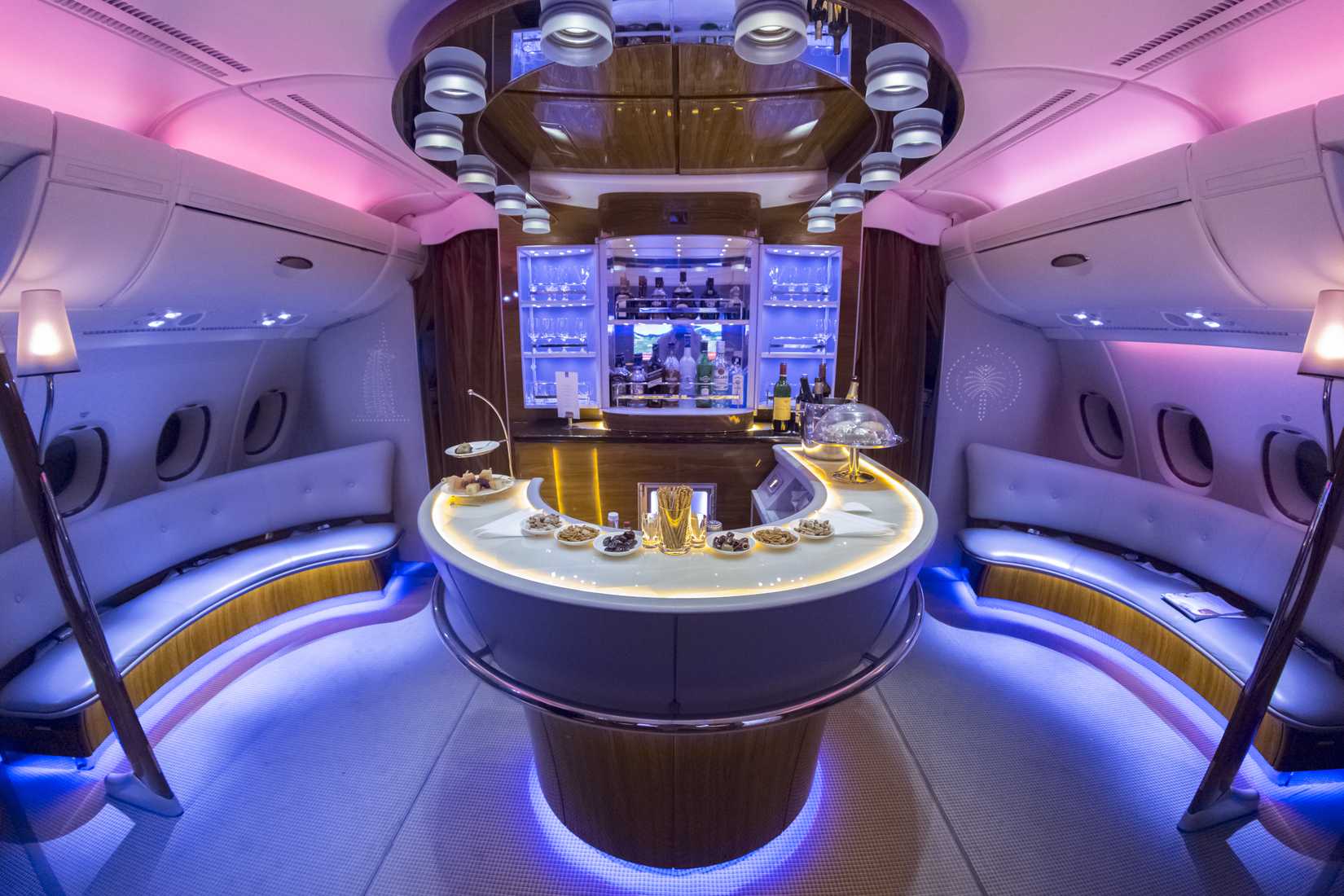
The gap between business class and first class on ultra-long-haul commercial routes has widened considerably in the current market cycle, driven not by seat recline angles or meal quality alone, but by fundamentally different design philosophies governing space, privacy, and service architecture. As lie-flat beds and direct aisle access have become baseline expectations across virtually all intercontinental business class products, carriers including Emirates, Qatar Airways, ANA, and Lufthansa have been forced to redefine the upper tier through categorical distinctions in cabin density, crew ratios, and ground infrastructure. Emirates' A380 first class, for example, operates just 14 enclosed suites on a double-deck aircraft that simultaneously carries upward of 70 business class passengers in its premium mid-cabin, producing crew-to-passenger ratios of approximately 1:2 versus 1:6 — a difference with direct implications for service quality over sectors exceeding 14 hours.
The operational logic driving dining-on-demand programs in top-tier cabins has particular relevance for professional aviation operators who routinely transport corporate principals and senior executives on transoceanic itineraries. On sectors such as New York to Singapore or London to Perth — routes where biological time displacement can exceed 12 hours — rigid galley service timelines impose physiological costs that a well-rested, high-functioning executive cannot easily absorb. When charter and fractional operators evaluate lift options for their clients or when Part 91K flight departments are booking commercial segments to position personnel, the granular difference between a synchronized meal cart and a fully on-demand culinary program becomes a legitimate productivity and recovery consideration rather than an amenity indulgence. Airlines that offer this flexibility are effectively selling time management and cognitive performance, not merely luxury.
The pre-departure differentiation described in the article carries operational weight for aviation professionals as well. Ground facilities such as Lufthansa's standalone First Class Terminal in Frankfurt — with private security screening, dedicated immigration processing, and tarmac transfers that bypass the gate queue entirely — compress the effective ground time experienced by high-value passengers and eliminate the stress loading that degrades decision-making capacity before long flights. For corporate flight departments benchmarking their own pre-departure experience against commercial alternatives, or for charter brokers justifying commercial first class over fractional lift, these terminal-level separations represent a meaningful competitive argument. The product increasingly begins at the curb rather than at the aircraft door.
Viewed against broader industry trends, the stratification described here reflects a post-pandemic restructuring of premium cabin economics in which airlines have discovered that the top percentile of fare revenue is highly price-inelastic and willing to pay substantially for verified exclusivity rather than marginal upgrades. Carriers that invested in suite architecture, chef-staffed galleys, and private terminal infrastructure during the 2022–2025 recovery cycle have reported consistently strong forward booking in their first class cabins even as yield compression has affected mid-market premium products. This dynamic has also accelerated parallel development in the business aviation segment, where VVIP large-cabin completions by Lufthansa Technik, Jet Aviation, and others increasingly borrow cabin privacy and service concepts from commercial first class — sliding partitions, chef-quality galley equipment, and dedicated rest quarters — as operators attempt to close the experiential gap between a configured BBJ or ACJ and an airline suite product. The convergence of these two market segments around a shared vocabulary of personalization, density control, and on-demand service signals a durable realignment of expectations among the most frequent users of long-range aviation.











 Read original article