Historic Tinian airfield slated for debut flight operations as Pentagon expands Pacific network
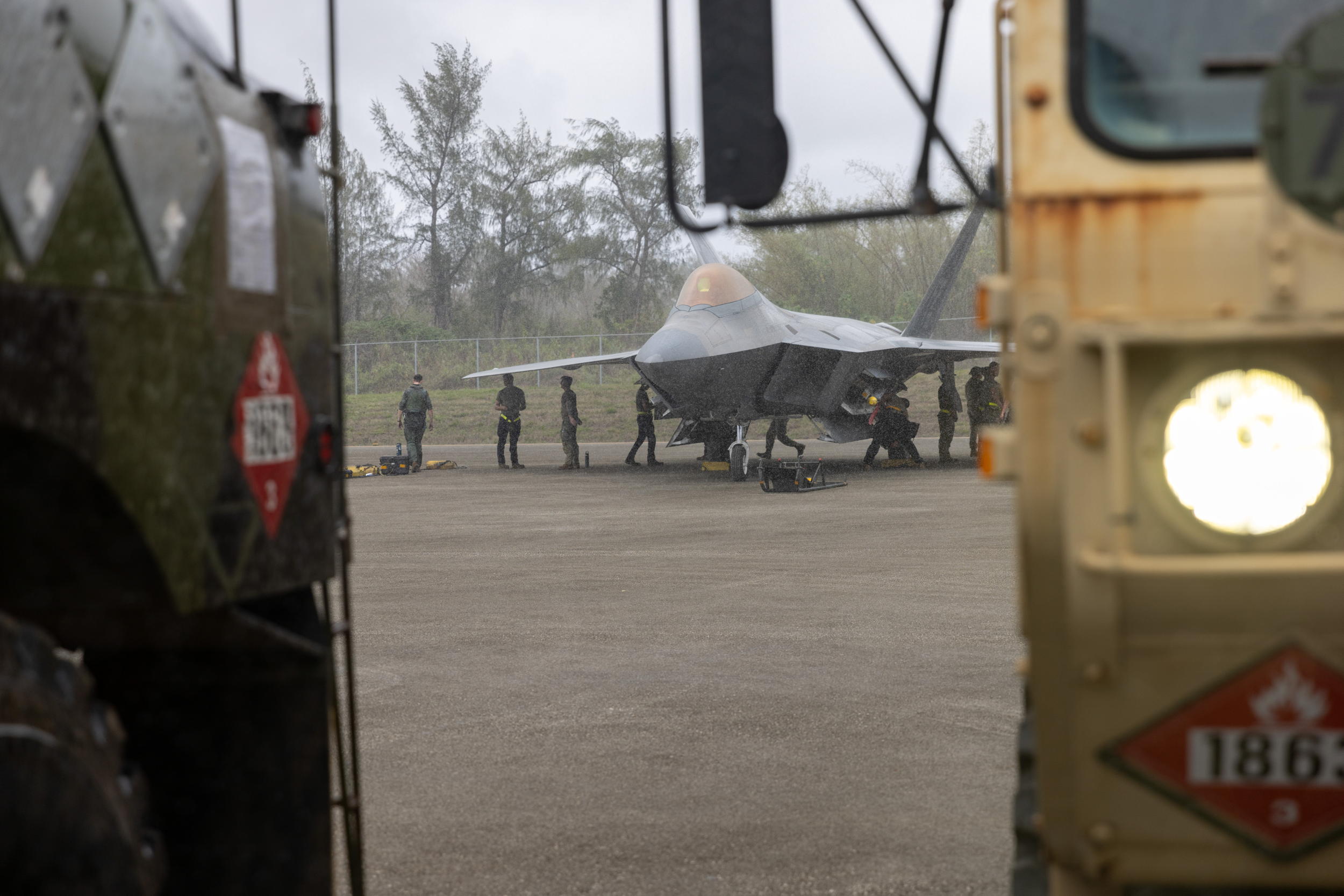
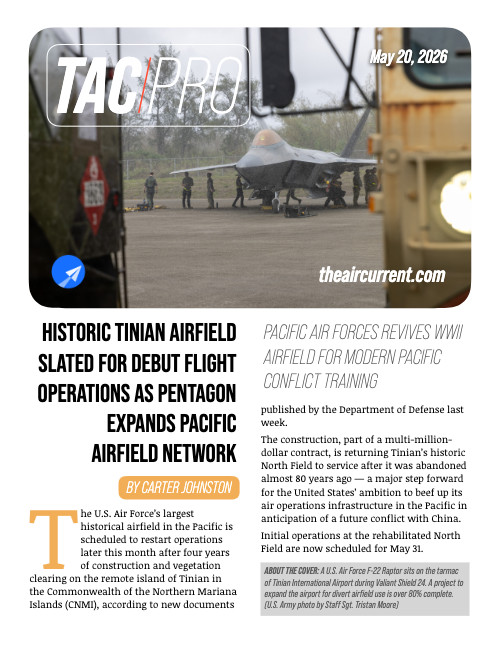
Tinian's North Field, the largest airfield constructed by the United States during World War II and the departure point for the atomic bombing missions against Hiroshima and Nagasaki in 1945, is scheduled to resume flight operations on May 31, 2026, following a multi-million-dollar, four-year rehabilitation effort. The project has involved extensive construction and vegetation clearing to bring the long-abandoned facility back to a functional standard after nearly eight decades of disuse. The initial operational milestone will be tied directly to Exercise Valiant Shield 2026, a major joint-force training event explicitly designed to test interoperability among U.S. military services in a simulated high-intensity conflict scenario against China. A detachment of 250 personnel will support Army flight operations from the rehabilitated field during the exercise, marking the first sustained military aviation activity at North Field since the late 1940s.
For working pilots and aviation operators transiting the western Pacific, the rehabilitation of North Field represents a tangible change to the airspace and operational environment in the Commonwealth of the Northern Mariana Islands. Tinian sits approximately 100 miles north of Guam and lies within a stretch of the western Pacific that sees both civil transoceanic traffic and growing military activity. The resumption of flight operations at a historically significant airfield of North Field's scale will almost certainly generate new NOTAMs, temporary flight restrictions, and modified airspace structures in the vicinity of the island, particularly during large-scale exercises like Valiant Shield. Operators flying business jets or charter aircraft along Pacific routes — including the popular Honolulu-Guam corridor and flights serving Japan, the Philippines, and Micronesia — should anticipate increased coordination requirements with ATC and heightened military activity in the region during exercise windows.
The strategic rationale behind North Field's rehabilitation is rooted in the U.S. military's Agile Combat Employment (ACE) doctrine, which prioritizes the dispersal of air assets across multiple, geographically distributed bases to complicate adversary targeting and reduce vulnerability to missile strikes. The Pentagon has openly acknowledged that 75 percent of the Indo-Pacific Command's area of responsibility is open ocean, making the limited number of large, fixed air bases in the region a critical vulnerability. Rehabilitating dormant or underutilized airfields — including North Field on Tinian, Orote Field on Guam, and sites in the Philippines and Palau — is a direct operational response to that constraint. North Field's six original WWII-era runway footprints, combined with Tinian's position deep in the Marianas archipelago, make it a strategically valuable node for dispersed basing, forward staging, and logistics in any high-end Pacific contingency.
The broader pattern of Pacific airfield rehabilitation and expansion carries long-term implications for both military and civil aviation infrastructure in the region. Increased U.S. military investment in Pacific basing tends to produce downstream benefits for civil aviation, including improved navigation aids, weather reporting infrastructure, and emergency divert options at locations that previously offered none. At the same time, the densification of military activity across Micronesian islands that have historically seen minimal aviation traffic introduces new coordination burdens and potential airspace conflicts for commercial and business aviation operators. Crews flying long-range business jets — Gulfstream G700s, Bombardier Global 7500s, and similar aircraft regularly transiting the Pacific on ultra-long-range routes — should ensure their dispatch and flight planning teams are monitoring CNMI airspace developments as North Field transitions from a construction site to an active military installation, particularly in the months surrounding major joint exercises.