Business Aviation Innovation Takes Center Stage in Germany
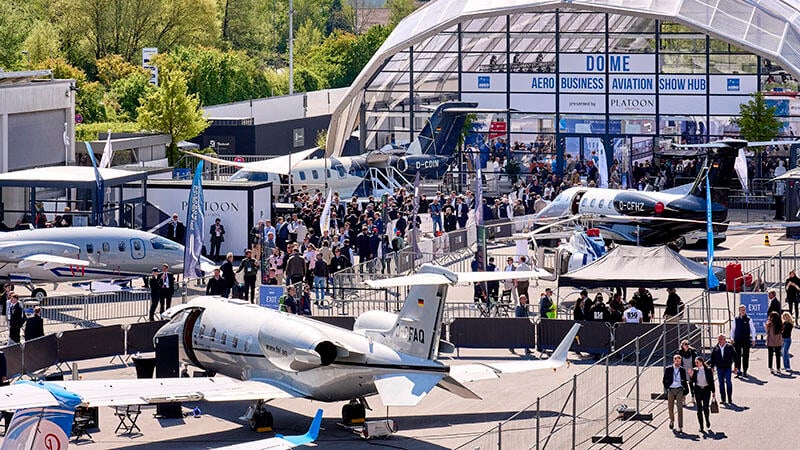
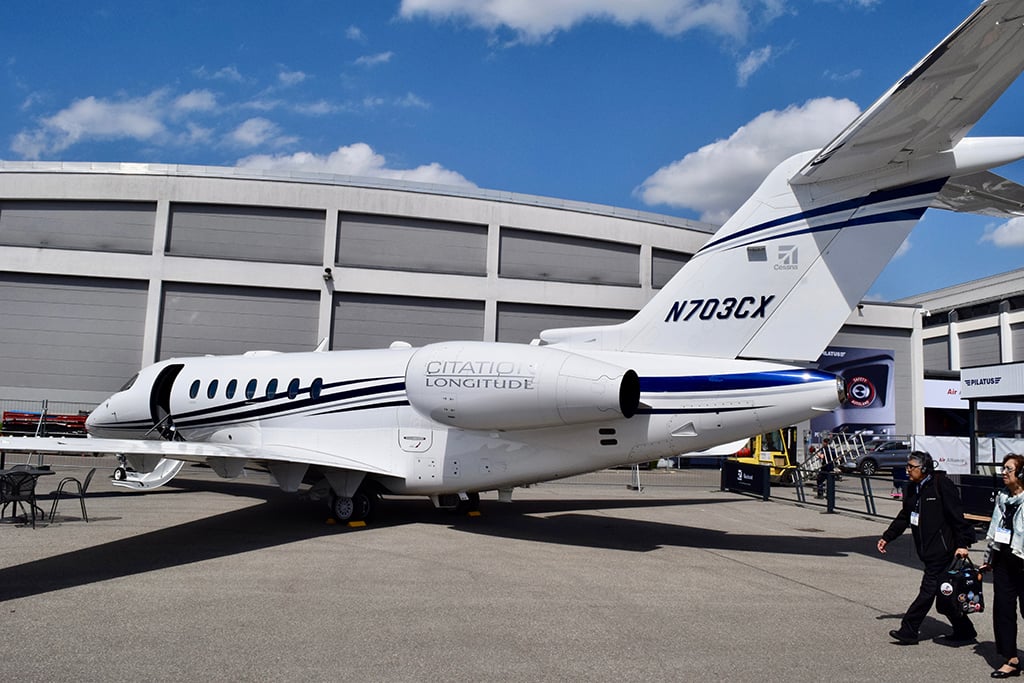
Aero Friedrichshafen 2026 emerged as the most significant iteration of Europe's premier general and business aviation trade event, drawing a record 860 exhibitors and approximately 37,000 visitors from 88 countries across more than one million square feet of exhibit space. The April 22-25 show in Friedrichshafen, Germany reflected the sustained momentum of business aviation as a category, with organizers and industry executives framing the sector's relatively compact size as a structural advantage for rapid technology adoption and sustainability-driven innovation. From ultralights to ultra-long-range business jets including the Citation Longitude, Global 6500, and Falcon 6X, the breadth of the static displays and announcements underscored that the market spans an unusually wide performance and mission envelope—a characteristic that continues to define how manufacturers approach product development and certification strategy.
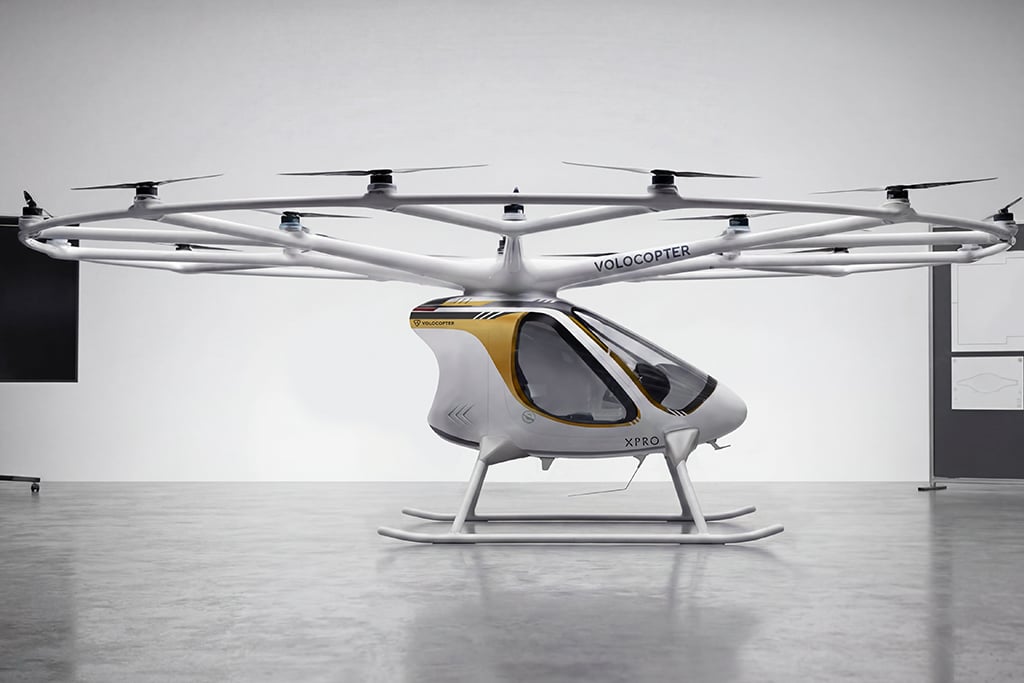
The most closely watched development at the show involved Volocopter, which resurfaced publicly one year after Diamond Aircraft acquired the company out of insolvency in March 2025. The newly unveiled VoloXPro is a fully electric ultralight multicopter designed for flight schools, flying clubs, and sightseeing operators, and is targeted for German light sport aircraft certification by year-end 2026. Sharing flight-control computers, battery architecture, and avionics with the larger VoloCity air taxi platform, the VoloXPro represents a deliberate componentization strategy that reduces certification risk and simplifies fleet maintenance across Volocopter's product line. The VoloCity itself remains on track for delivery to German air rescue organization ADAC Luftrettung within 12 to 18 months, pending completion of EASA's demanding SC-VTOL certification requirements—a milestone that would make it one of the first eVTOL aircraft to enter operational service under a full European regulatory framework. Diamond's ownership by Chinese automotive supplier Wanfeng adds a manufacturing scale dimension that pure-play aviation startups typically lack, and that resource base appears to be directly accelerating Volocopter's recovery timeline.
For operators and flight departments tracking fleet planning horizons, several legacy manufacturers used the show to announce meaningful product updates. Piaggio Aerospace, now under Turkish aerospace firm Baykar following its June 2025 acquisition from Italian government control, announced a launch order for two P.180 Avanti NX turboprops from an undisclosed European operator. The updated Avanti NX is expected to enter service in three to four years with upgraded avionics and a revised cabin interior, signaling that Baykar intends to aggressively reposition the distinctive pusher-prop platform as a viable competitor in the light turboprop business aircraft segment. Tecnam simultaneously introduced the P2012 VIP executive variant and the P2010 Mk. III upgrade—moves that reflect the persistent demand for light, cabin-class piston aircraft equipped with modern avionics suites including Garmin integration and updated FMS architecture. These incremental but operationally significant upgrades matter directly to Part 91 operators and small charter fleets that rely on these airframes for owner-flown or lightly staffed operations where avionics recency and parts availability are primary concerns.
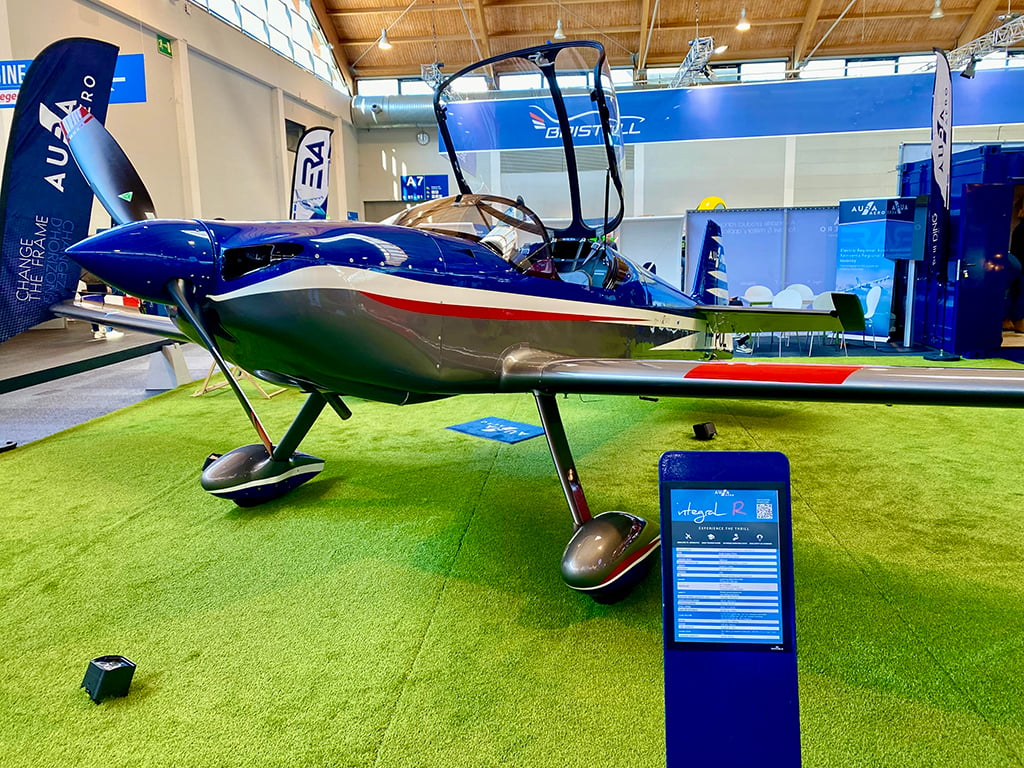
The broader narrative at Friedrichshafen 2026 reinforced a pattern visible across the global aviation trade show circuit: the convergence of electrification, hybrid propulsion, and traditional aircraft evolution is no longer a speculative discussion but an active product-development reality. Aura Aero's unveiling of ERA regional hybrid-electric cabin configurations—targeting a 2030 entry into service—alongside Elixir Aircraft's next-generation two-seat trainer with planned facilities in both France and Sarasota, Florida, illustrates that European manufacturers are increasingly pursuing dual-market strategies spanning both the European and North American certification environments. For professional pilots and aviation operators, the practical takeaway from this show cycle is that the electrification transition in business and general aviation is advancing along multiple simultaneous tracks: certified light sport platforms arriving within months, eVTOL air taxi operations beginning within two years, and hybrid regional aircraft on a four-year horizon. Flight departments and training organizations evaluating long-range fleet strategies should treat these timelines as planning inputs rather than aspirational targets, particularly given that regulatory frameworks in both EASA and FAA jurisdictions are actively evolving to accommodate these new categories.










 Read original article