Change incorporation on Boeing 777-9s will take “years”, CEO said
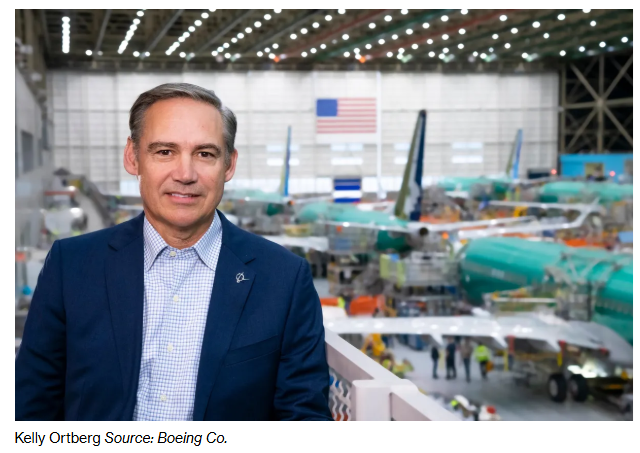
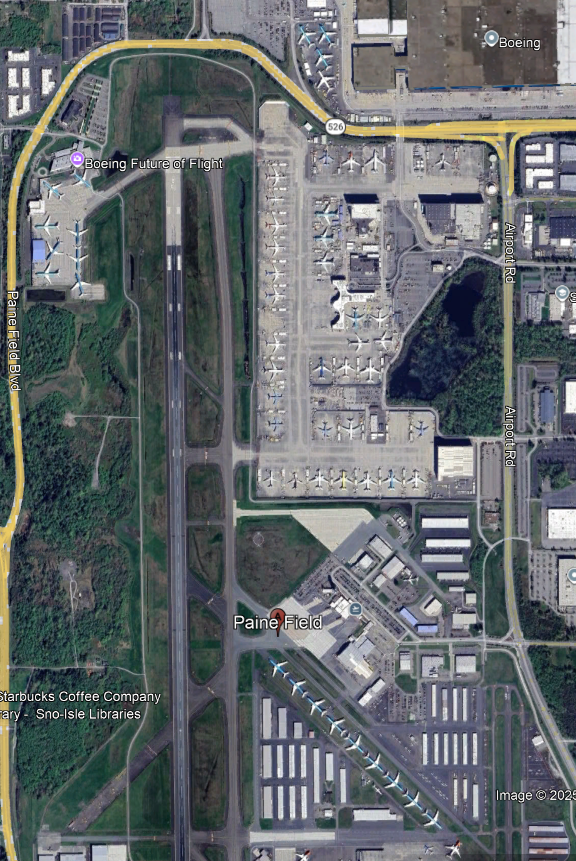
Boeing's 777-9 program faces a change incorporation process spanning multiple years across more than 30 stored airframes at Paine Field in Everett, Washington, with CEO Kelly Ortberg confirming during the first-quarter 2026 earnings call that the scope of required modifications varies significantly by individual aircraft and that per-airplane work scopes are still being defined. The oldest stored 777-9s, some parked since 2020, require the most extensive structural and systems changes — a direct consequence of six years of certification testing, design evolution, and fixes identified during that process. Boeing's stated approach is to first bring all aircraft to a common configuration baseline before applying the final round of modifications, a sequencing strategy Ortberg characterized as the most efficient path forward. Critically, no per-airplane timeline has yet been published, meaning the actual cadence of deliveries remains undefined even as Boeing has publicly targeted initial 777-9 revenue service for 2027.
The change incorporation challenge on the 777-9 exists within a well-documented pattern for Boeing's recent wide-body and narrowbody programs, and the historical comparisons carry operational weight for aviation professionals tracking fleet deliveries. The 787 fuselage-gap issue discovered in 2020 required three to four months of work per aircraft. Former CEO David Calhoun stated that changes to grounded 737 MAX airframes took longer to complete than it originally took to build them — a striking benchmark given that pre-crisis MAX production cycles ran roughly ten days per airplane on the assembly floor. If the 777-9's structural change burden on older stored airframes approaches either of those precedents in complexity, the multi-year timeline Ortberg cited becomes entirely plausible and potentially conservative. Airlines that have held 777-9 orders for years — including Emirates, Lufthansa, Qatar Airways, and Cathay Pacific, all of which have built long-range network plans around the type — continue to absorb scheduling uncertainty that directly affects fleet transitions, retirement planning for older 777 Classics, and capacity deployment on high-density transoceanic routes.
For operators and pilots engaged in fleet planning, the 777-9 delay reinforces a structural reality about Boeing's current production environment: the FAA's post-MAX oversight posture has raised the threshold for what constitutes an acceptable certification artifact, and any gap between an aircraft's production configuration and its delivery-ready state carries a non-trivial correction cost. The change incorporation process is not unique to Boeing — it is a standard feature of commercial aircraft manufacturing — but the volume of changes required across 30-plus widebody airframes simultaneously, some stored for six years, represents a resource and logistical burden with no direct modern precedent at Boeing's scale. The dedicated BCA team Ortberg referenced is being tasked with work-scope definition before labor can even be scheduled, which means near-term delivery visibility remains limited. Until individual airplane statements of work are finalized and labor hours estimated, any 2027 entry-into-service projection for the 777-9 carries meaningful execution risk that operators should weigh against contingency fleet arrangements.
The broader implication for commercial and business aviation is that Boeing's recovery timeline continues to be gated not just by new production rate normalization but by the enormous liability represented by its stored-aircraft backlog across multiple programs. The 777-9 situation mirrors, in structure if not identical cause, the multi-year 787 delivery suspensions that cost Boeing billions and forced operators to scramble for substitute capacity. Long-haul operators dependent on the 777-9's range and payload profile — particularly ultra-long missions that benefit from the GE9X engine's fuel efficiency — have no direct Airbus equivalent available in sufficient near-term supply, as the A350-1000 order book is itself constrained. This competitive dynamic gives Boeing some commercial insulation against cancellations but does not eliminate the financial and reputational pressure of sustained delays. For flight departments and airline network planners, the practical takeaway is that firm 777-9 delivery slots should be treated as provisional until Boeing produces aircraft-specific change incorporation completion schedules, a disclosure that has not yet materialized as of the first quarter 2026 earnings call.






 Read original article