Why The B-2 Spirit's Flying Wing Design Makes The Aircraft So Overpowered
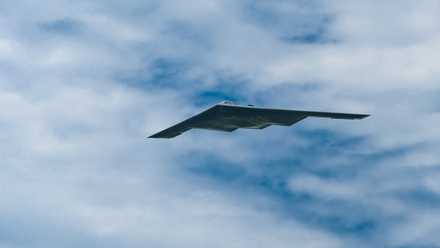
The Northrop Grumman B-2 Spirit represents one of the most consequential engineering convergences in aviation history: a design philosophy conceived in the 1940s that could only be realized when digital fly-by-wire technology matured decades later. Jack Northrop's XB-35 and YB-49 flying wing prototypes demonstrated compelling aerodynamic efficiency but proved fundamentally uncontrollable by human pilots without computer intervention. The introduction of quadruple-redundant fly-by-wire avionics in the late 1970s removed that barrier, and the result — unveiled at Palmdale's Air Force Plant 42 in 1988 — was an aircraft that married extreme stealth geometry with genuine global strike capability. The tailless, fuselage-free planform that made early flying wings unflyable turned out to be precisely the same geometry that defeats radar: vertical surfaces act as corner reflectors for radar energy, and their complete elimination, combined with continuous leading and trailing edge curvature set at identical angles, collapses the aircraft's radar cross-section to a handful of narrow spikes rather than a broad return. Radar-absorbent materials and deeply buried, serrated engine intakes obscure the highly reflective rotating fan blades, making the aircraft's stealth a function of integrated systems design rather than any single cloaking mechanism.
For working pilots and aviation operators, the B-2's fly-by-wire dependency is perhaps the most instructive aspect of the platform. The 172-foot wingspan bomber is aerodynamically unstable by design and cannot be flown without continuous computer augmentation — a reality that fundamentally reframes the pilot's role from direct control authority to supervisory management of an automated system. The two-person crew sits side by side behind a minimalist glass cockpit in which screens have replaced the banks of mechanical gauges and discrete switches found on legacy platforms like the B-52. The Vertical Situation Display serves as the primary flight interface, distilling complex aerodynamic data into actionable information for a crew managing missions that routinely exceed 40 hours. This operational profile — ultra-long-endurance, single-leg sorties covering more than 6,000 nautical miles unrefueled before aerial refueling extends the reach further — places extraordinary demands on crew resource management, fatigue mitigation, and systems monitoring in ways that share meaningful parallels with long-haul commercial operations conducted under Part 121. The automation architecture is not a convenience but a structural requirement, a distinction that holds lessons for any cockpit environment where the flight envelope is managed more by software than by direct human input.
The $2 billion per-unit acquisition cost of the B-2 — a figure that encompasses not just manufacturing but the foundational research and development breakthroughs in stealth, materials science, and fly-by-wire integration — underscores how transformative defense investment in advanced aviation technology has historically been. Much of the avionics philosophy that defines modern commercial and business jet cockpits, including the integrated primary flight displays, electronic centralized aircraft monitoring, and envelope protection systems found across Airbus, Boeing, Gulfstream, and Dassault platforms, traces its lineage to fly-by-wire work pioneered in programs like the B-2. The same logic that makes the B-2's tailless planform manageable — the aircraft's computers continuously calculating and applying corrections faster than any human could — is the same logic embedded in the flight control laws of modern transport category aircraft that protect against stall, overspeed, and structural exceedance. For corporate and airline pilots operating glass-cockpit jets with envelope protection, the B-2 is not a distant military curiosity but a foundational ancestor of the automation philosophy they manage daily.
The B-21 Raider, which completed its first flight in November 2023, represents the next iteration of this lineage and signals that the flying wing configuration — once considered a dead end after the YB-49's cancellation — has become the definitive geometry for penetrating, survivable strike aircraft. Where the B-2 fleet was limited to 21 aircraft due to post-Cold War budget realities, the B-21 program was structured from the outset for larger-scale production and lower per-unit cost, reflecting lessons learned from the B-2's procurement history. The transition from B-2 to B-21 also mirrors a broader pattern in aviation: each generational leap in aircraft capability has required a corresponding leap in automation sophistication, reducing the cognitive and physical demands on the crew while simultaneously expanding the operational envelope of the platform. As sustainable propulsion, autonomous systems, and advanced materials continue to reshape commercial and business aviation, the trajectory first defined by the B-2 Spirit — where the aircraft's viability depends entirely on its digital nervous system — is increasingly the template across the entire industry.







 Read original article