Timeless: Etihad's First Airbus A380 Transformed Into 380 Luxury Watches
AIM Watches, founded by airline pilot Greg Browne, has launched the Alpha Series (A380) AUH Edition — a limited run of exactly 380 Swiss-made timepieces incorporating components salvaged from A6-APA, the first Airbus A380 delivered to Etihad Airways and the 150th A380 produced overall. Priced at $3,250 each and individually numbered, the watches are assembled and inspected in La Chaux-de-Fonds, Switzerland, while carrying a "Designed in the UAE" designation that reflects Browne's personal connection to the Emirates and the Etihad brand. Each piece features 26 jewels, a 38- to 41-hour power reserve, accuracy within four seconds per day, and a crown profile modeled after the A380's distinctive engine fan. The crown jewel of the design is a red-and-black "barber's pole" second hand with a white arrowhead — a deliberate nod to aviation instrumentation culture. An initial batch of ten units began shipping at month's end, with the next drop of ten units expected by the end of June.
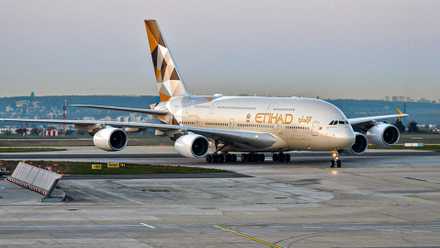
The provenance of A6-APA carries genuine weight within the aviation community. As the inaugural Etihad A380 and a milestone delivery in the type's production history, the aircraft represents a specific and documented chapter in widebody aviation. Etihad's A380 fleet was particularly notable for its engineering ambition, featuring the now-legendary three-room "Residence" suite on the upper deck — one of the most operationally complex first-class products ever placed in commercial service. That Browne, himself an active airline pilot, chose to anchor the brand in UAE aviation culture rather than a purely European or American frame of reference speaks to the increasingly globalized nature of professional flying careers. For pilots who have operated through Abu Dhabi or built careers within the Gulf aviation ecosystem, these watches carry the kind of institutional memory that standard horological products cannot replicate.
The broader memorabilia market surrounding the A380's retirement is accelerating in parallel with the type's gradual drawdown from active service. Aviationtag — a German firm specializing in certified aircraft skin collectibles — has produced tags from ex-Etihad, Lufthansa, and Singapore Airlines A380s, while Dubai-based Falcon Aircraft Recycling produced Emirates-sourced keyrings sold through Aviationtag with a portion of proceeds directed to the Emirates Foundation. AIM Watches itself already offers similar timepieces incorporating components from ex-Emirates and ex-Lufthansa A380s, making the Etihad edition the third airline-specific variant in the brand's growing portfolio. The pattern across these initiatives is consistent: as aerospace recyclers dismantle hulls that once carried hundreds of passengers on ultra-long-haul routes, a secondary market has formed around authenticated, component-derived artifacts aimed squarely at aviation professionals and enthusiasts willing to pay a premium for documented provenance.
The commercial trajectory of the A380 program provides the essential backdrop for understanding why this memorabilia ecosystem exists at all. Despite entering service in 2007 with considerable fanfare and genuine technological achievement — including a fully pressurized upper deck, composite wing structures, and a four-engine configuration that once symbolized the upper limit of civilian transport ambition — the type never overcame the fundamental economics of quad-engine operation versus modern twin-engine widebodies. The program ended production in 2021 with 251 aircraft built, well short of the 700-unit threshold Airbus had originally cited as the commercial breakeven point. Pandemic-era retirements accelerated the type's departure from many fleets, and several operators quietly returned aircraft to storage or directly to recyclers without fanfare. The upcycling market for A380 components is, in that context, a form of authorized industrial archaeology — converting the physical residue of an ambitious but commercially constrained program into durable artifacts that preserve its memory at a scale appropriate to its cultural footprint.
For professional pilots, the appeal of products like the AIM Watches Alpha Series extends beyond nostalgia. Pilot-founded aviation brands occupy a specific credibility niche: Browne's operational background lends design decisions — the instrument-referencing second hand, the engine-fan crown profile, the Swiss movement standard — an authenticity that pure luxury marketing cannot manufacture. The two-year warranty and individual inspection protocol in La Chaux-de-Fonds also position the product closer to instrument-grade accountability than fashion-watch territory, a distinction that resonates with crews accustomed to precision timepieces as professional tools. As the A380 fleet continues to contract and the window for sourcing authenticated components narrows, the finite nature of the 380-unit run is not merely a marketing device — it reflects a genuinely diminishing supply of primary material from a type whose largest surviving operator, Emirates, still flies over 100 examples but has disclosed no long-term commitment to fleet expansion.





 Read original article