Not Just Air Force One: The World's Most Impressive Government VIP Fleets
Government VIP aviation in 2026 represents one of the most technically demanding and politically consequential niches in commercial aviation, and the global landscape of state aircraft reveals as much about geopolitical strategy as it does about aircraft capability. The United States continues to operate the two Boeing VC-25A aircraft — 747-200B derivatives that have served since the early 1990s — as the most recognized government transport platforms in the world. These aircraft combine aerial refueling capability, hardened secure communications, and onboard medical and command facilities that transform a widebody airframe into a self-contained sovereign command post. The in-progress VC-25B program, based on the Boeing 747-8, is absorbing significant cost and schedule pressure but remains the centerpiece of US presidential aviation modernization, incorporating updated avionics and mission systems designed to sustain American airborne executive continuity well into the mid-21st century.
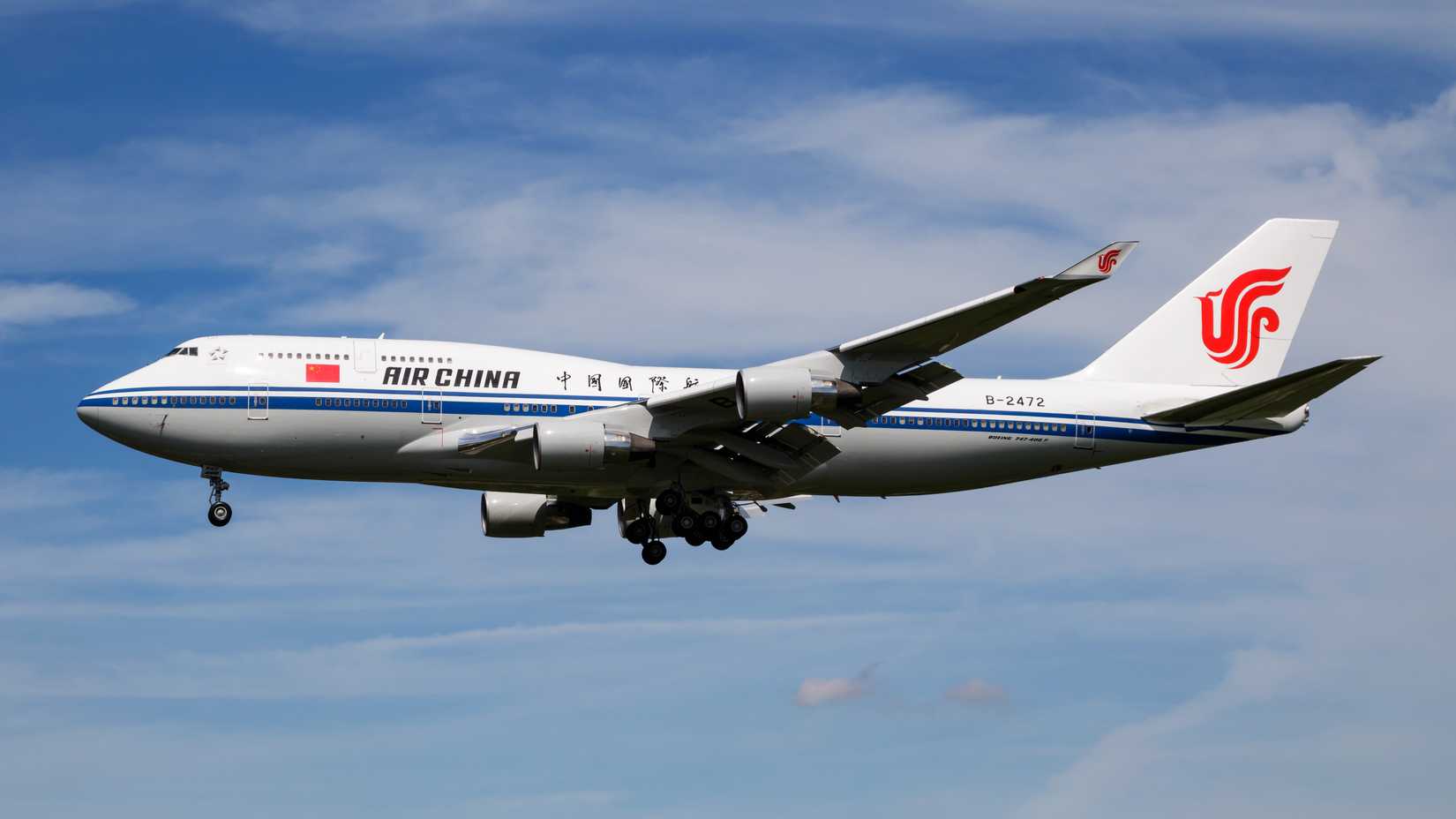
China's approach to presidential aviation offers a direct strategic contrast and carries practical implications worth understanding. Rather than operating a permanently dedicated and publicly identifiable head-of-state aircraft, the People's Republic rotates presidential missions through a small pool of specially configured Air China Boeing 747-400s — primarily the B-2447 and B-2472 airframes — temporarily stripped of commercial seating and outfitted with secure communications, private suites, and conference facilities. This methodology eliminates the single-point vulnerability of a permanently marked state aircraft, while also preserving economic utility by returning those airframes to revenue service between diplomatic missions. The 747-400's four-engine configuration, long-range capability, and high payload capacity make it well-suited to intercontinental state travel, and China's model is notably replicated across several Asian nations including South Korea, Singapore, Vietnam, and Turkmenistan, each of which converts flag-carrier aircraft for official visits rather than maintaining standalone government fleets.
Russia's counter-positioning in this space is equally deliberate, though driven by an entirely different logic. The Ilyushin Il-96 — a Soviet-era widebody quadjet produced domestically — serves as Putin's primary transport, a choice that prioritizes strategic self-sufficiency and sanctions insulation over Western airframe performance benchmarks. For professional pilots and aviation operators tracking global fleet trends, this matters because it signals that geopolitical decoupling is now actively shaping aircraft procurement and operational doctrine at the highest levels. Turkey's acquisition of a Boeing 747-8 configured as TC-TRK similarly reflects a middle-power approach: investing in a modern, high-capability Western widebody to project national prestige on intercontinental routes while maintaining full sovereign control of the asset.
For working pilots and Part 91/135 operators in the business aviation sector, the architecture of government VIP fleets offers a direct lens into the upper boundary of what mission-configured wide-cabin aircraft can accomplish. The same fundamental requirements — range without intermediate stops, secure communications, redundant systems, and cabin layouts optimized for working operations rather than passenger comfort — define the mission profiles of ultra-long-range business jets like the Gulfstream G700, Bombardier Global 7500, and Dassault Falcon 10X. The operational decisions governments make when configuring these platforms, including the trade-off between fleet dedication and shared-use flexibility, mirror decisions that corporate flight departments make when structuring Part 91K fractional arrangements or evaluating whether a charter supplement makes more economic sense than a fully owned asset.
The broader trend visible across this landscape is the accelerating proliferation of high-capability state aviation beyond the traditional US-Russia-UK axis. As Boeing 777X derivatives, Airbus A350s, and A330 variants enter government service across Europe, the Middle East, and Asia-Pacific, the technical bar for what constitutes a credible state transport is rising simultaneously with the political premium placed on owning one. For aviation operators and crews who interact with these aircraft at international FBOs and through diplomatic overflight coordination, understanding the operational philosophies behind each nation's fleet — dedicated versus converted, domestic versus Western-sourced, commercially flexible versus purely sovereign — is increasingly relevant situational awareness in a world where government aviation traffic is growing in both volume and complexity.









 Read original article