The F-35's Safety Record Nobody Talks About When Comparing It To The F-16
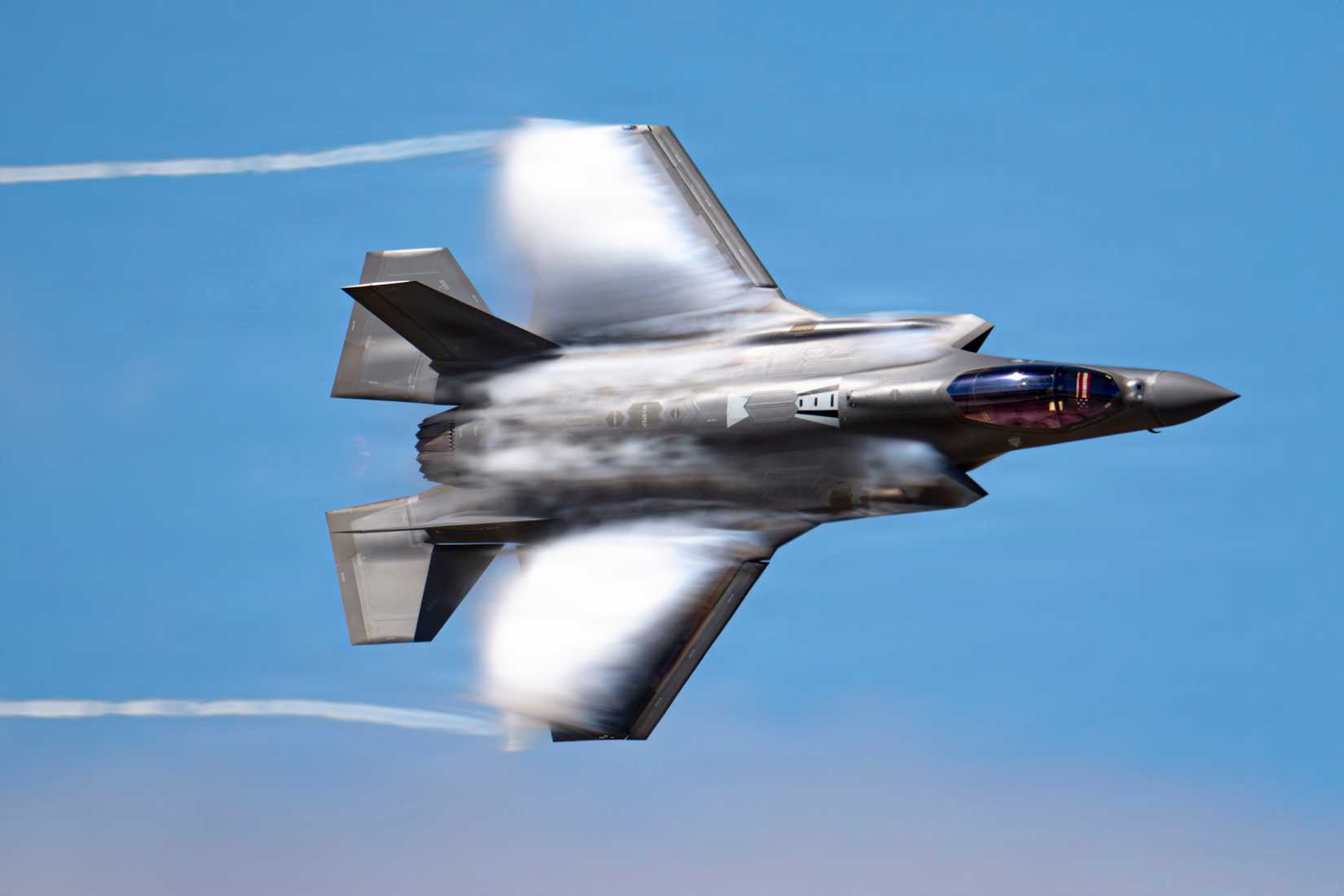
The F-35 Lightning II has quietly accumulated one of the most favorable safety records of any tactical fighter jet in aviation history, a fact that rarely surfaces amid the program's well-documented cost overruns and procurement controversies. With the global fleet surpassing one million flight hours in early 2025, the Joint Strike Fighter has stabilized at approximately 1.5 Class A mishaps per 100,000 flight hours across all variants, with the F-35A conventional takeoff and landing variant performing even better at roughly 0.8 to 1.1 mishaps per 100,000 hours. Against this metric, the aircraft compares strikingly well to its predecessors: the F-16 carries a lifetime average of 3.55 Class A mishaps per 100,000 hours, and the F-15 entered service with an early rate of 5.1 per 100,000 hours. Total airframe losses for the F-35, including all losses sustained during flight testing beginning in 2006, stand at an estimated 15 to 17 aircraft, with only one recorded fatal crash in the program's operational history — a figure that stands in sharp contrast to the F-16's more than 150 hull losses and over 50 fatal accidents across its service life.
The safety margin enjoyed by the F-35 is not coincidental — it is the direct product of technological maturation that the F-16 itself made possible. The Viper was the first mass-produced fighter to employ fly-by-wire flight controls from initial production, and because controlled flight into terrain mishaps were a persistent problem in the F-16's early operational years, it became the forcing function for the development of Automatic Ground Collision Avoidance System (Auto GCAS). The F-35 inherited and advanced both technologies. Its mature FBW architecture manages the jet's deliberately unstable aerodynamic design while simultaneously reducing pilot workload, and Auto GCAS has been credited with saving pilot lives by autonomously recovering the aircraft from dive trajectories that would otherwise be unsurvivable. The predictive maintenance system — which continuously analyzes real-time sensor data across aircraft systems to anticipate failures before they manifest — represents a further safety layer that legacy fleets simply did not possess. Investigations into recent incidents, including the 2025 Eielson AFB accident in Alaska, have generally pointed to environmental conditions or isolated human factors rather than systemic design deficiencies, reinforcing the program's structural safety posture.
For professional aviators and operators, the F-35's safety trajectory carries implications that extend well beyond military aviation. The helmet-mounted display system that projects flight and combat data into the pilot's visor — including night vision capability and voice command activation — represents a human factors engineering approach that directly addresses one of aviation's most persistent threats: cockpit workload saturation during high-criticality flight phases. By integrating situational awareness data into the pilot's natural field of view rather than requiring head-down instrument scanning, the system reduces the cognitive bottleneck that contributes to controlled flight into terrain, spatial disorientation, and task fixation events. These are accident categories that appear with regularity across Part 91, 91K, and 135 operations as well as scheduled airline service. The ergonomic side-mounted control stick, also traceable to the F-16's design philosophy, speaks to decades of physiological research on high-G maneuvering and motor control that has influenced cockpit design conventions broadly.
The broader trend illustrated by the F-35's record reflects an aviation industry-wide shift toward embedding safety technology at the design level rather than relying on procedural overlays and pilot technique alone. Predictive maintenance architectures are increasingly entering commercial aviation through programs like Boeing's AnalytX and Airbus's Skywise platform, both of which apply machine learning to fleet-wide maintenance data to flag component degradation before it becomes operationally consequential. Auto GCAS technology, originally developed with F-16 operators, has already migrated into business aviation through enhanced ground proximity warning systems and envelope protection logic in modern glass-cockpit aircraft. The F-35's statistical performance, now validated across one million flight hours and a fleet of more than 1,300 aircraft operated by multiple nations under varied operational conditions, provides a credible data point that purpose-built safety systems and advanced human-machine interface design can meaningfully bend the mishap rate curve downward — even for aircraft that are inherently complex to operate.








 Read original article