175 Cities & 650 Routes: Allegiant-Sun Country Merger Creates America's 8th Largest Airline
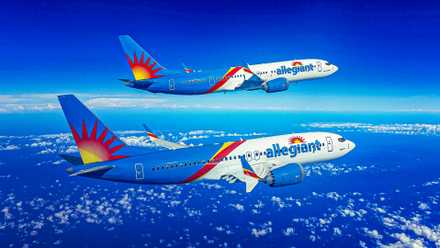
Allegiant Air's $1.5 billion acquisition of Sun Country Airlines, completed May 14, 2026, produces the eighth-largest U.S. carrier by seat capacity, combining a 193-aircraft fleet across Allegiant's Airbus A319/A320 and Boeing 737 MAX variants with Sun Country's all-Boeing 737 Next Generation fleet. The combined entity will serve approximately 175 destinations across more than 650 routes, projecting annual passenger volume near 22 million. Both brands will operate independently in the near term, though Sun Country's identity is expected to be fully absorbed into the Allegiant name over time. Minneapolis-St. Paul International Airport retains its role as a primary hub under the merged structure, while Las Vegas is designated as the eventual corporate headquarters. The carrier holds firm orders for 30 additional aircraft with options on 80 more, providing a credible pathway toward a fleet exceeding 300 planes.
For pilots employed at either carrier, the integration timeline carries immediate professional relevance. Seniority list integration — historically the most contentious element of any airline merger — will be subject to negotiation between pilot groups, and the process of harmonizing fleet types, training syllabi, and operational procedures across two distinct cultures typically spans three to five years. The addition of Sun Country's charter and cargo divisions, including its Amazon Prime Air cargo contracts and sports and government charter operations, meaningfully expands the flying profile of the merged airline beyond traditional scheduled leisure service. Pilots at either carrier should anticipate scope discussions and potential bid restructuring as the combined airline rationalizes its base structure and operational model around Las Vegas and Minneapolis.
The merger's strategic logic is inseparable from the severe fuel cost environment that is reshaping U.S. low-cost aviation in 2026. With fuel prices reported to have doubled since the beginning of the year, ultra-thin margin carriers face an existential threat, as demonstrated by Spirit Airlines' recent collapse. Allegiant's projection of $140 million in annual synergies within three years reflects the standard consolidation playbook — fleet standardization, overlapping overhead reduction, and combined procurement leverage — but the diversification of revenue through charter and cargo operations is the more durable structural advantage. The Association of Value Airlines' unsuccessful $2.5 billion relief petition to the Trump administration, rejected by Transportation Secretary Sean Duffy, confirms that distressed low-cost carriers cannot rely on federal intervention and must achieve scale and revenue diversification through market mechanisms alone.
The broader implication for the commercial aviation sector is a continuing compression of the carrier tier between the Big Four legacy operators and the true ultra-low-cost model. As Spirit's failure and this merger demonstrate, standalone ULCCs operating without diversified revenue or sufficient network density are increasingly vulnerable in a high-fuel-cost, competitive environment. The Allegiant-Sun Country combination represents a deliberate pivot toward a hybrid leisure carrier model — maintaining low-cost DNA while layering in charter, cargo, and loyalty revenue that legacy carriers have long used to stabilize earnings. For operators in the charter and cargo space, Sun Country's existing Amazon Prime Air relationship and sports charter infrastructure signal that the merged airline will compete more aggressively for government, sports team, and high-value group charter contracts that have historically been the domain of smaller dedicated charter operators. Regional and fractional operators serving leisure markets overlapping with Allegiant's point-to-point network should also monitor how the enlarged route footprint reshapes demand patterns at secondary and tertiary airports central to the Allegiant model.





 Read original article